
























Hair transplant6 min read
What are grafts in hair transplantation, and how are they handled?
Every hair transplant is built from grafts, yet few patients know what a graft actually is. This article explains what a single graft contains, which types of graft have been used over the years, how grafts are extracted, kept and implanted with modern techniques, and why the way they are handled matters as much as how many are moved.
By messaging us, you agree to our Privacy Policy
Medically reviewed by Ellina V. Goncharova, dermatovenereologist, trichologist, surgeon. Review date: .
The main points in 30 seconds
- A graft is a tiny unit of tissue with one or several living follicles, moved from the donor area to a thinning area.
- Hair grows naturally in follicular units of one to four hairs, and modern FUE and DHI move these units intact.
- Single-hair grafts go to the front of the hairline for a soft, natural edge, with larger units further back.
- Outside the body grafts must be kept moist and cool, handled gently and implanted as quickly as reasonably possible.
- The number of grafts depends on your stage of hair loss, donor density and hair texture, with reserves kept for the future.
Key facts about the procedure
- Stay in clinicSame day
- Final result12–18 months
- AnaesthesiaLocal
- Price
$2,700from $2,200
What a graft is
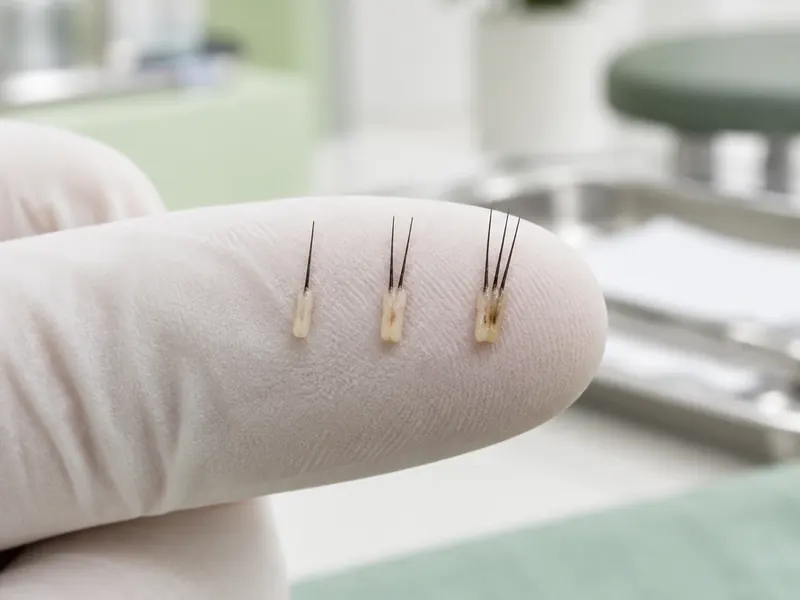
In hair transplantation, a graft is a tiny unit of tissue taken from the donor area and moved to an area where hair has thinned or disappeared. It usually contains one or several hair follicles together with a small amount of the surrounding skin, fat and the fine blood vessels and nerves that nourish the follicle.
Price in your country — message us on WhatsApp
WhatsAppThe graft is the basic building block of the procedure. Hair does not grow from the visible shaft but from the follicle beneath the skin, so what is really transplanted is a living root. If the graft is damaged, dried out or kept outside the body for too long, the follicle may not survive, and the hair it was meant to produce will not grow. That is why the quality of each graft matters as much as the total number.
Types of grafts
Hair grows naturally in small groups of one to four hairs, called follicular units. Modern techniques aim to move these natural units intact, but several other terms are still used, especially when describing older methods.
More on this topic: Hair Transplant, Beard Transplant, Eyebrow Transplant, FUE & DHI Hair Transplant in Singapore, FUE & DHI Hair Transplant in Málaga.
Follicular unit
A natural group of one to four follicles with its own sebaceous glands, nerves and blood vessels. Transplanting whole follicular units is the basis of modern FUE and DHI and helps the result look natural.
Micrografts
Grafts with one or two hairs. Single-hair grafts are typically placed at the very front of the hairline, where a soft, irregular edge looks most natural, and in small areas that need refinement.
Minigrafts
Small groups of about three or four follicles. Historically they were used to add volume over larger thinning areas; today they are less common, because natural follicular units give a more refined result.
Slit grafts and strip grafts
Slit grafts containing several follicles, and long thin strips of skin with many follicles, belong mostly to older techniques. In the strip method (FUT), a strip is removed from the back of the head and then divided under magnification into individual follicular units before implantation.
Which grafts are used, and where, depends on the area being treated, the desired look and the characteristics of your hair. This is decided by the surgeon after an examination.

Hair transplant abroad: choose a city and clinic
Prices, the clinic and a free online consultation for each city:
How grafts are extracted
There are two main ways to obtain grafts from the donor area, usually the back and sides of the head, where hair tends to be more resistant to androgenetic hair loss.
- FUT (strip method). A strip of scalp is removed and divided into grafts. It can yield many grafts in one session, but it leaves a linear scar and the donor area usually takes longer to heal.
- FUE (follicular unit extraction). Each graft is removed individually with a micro-punch. There is no linear scar, only tiny dot-like marks that are usually hard to see, and the donor area generally recovers faster. The session can be long and depends heavily on the skill of the team.
Robot-assisted systems can support the extraction step, but the planning, the design of the hairline and the quality control still rely on the medical team.
How grafts are handled outside the body
Between extraction and implantation, grafts are outside the body, and this is when they are most vulnerable. Good practice focuses on a few simple principles:
- grafts are kept moist and cool in a special storage solution so they do not dry out;
- they are sorted under magnification by the number of hairs, so single-hair grafts can go to the hairline and multi-hair grafts further back;
- they are held gently by the surrounding tissue, not squeezed at the root, to avoid crushing the follicle;
- the time out of the body is kept as short as reasonably possible.
These details are invisible to the patient on the day, but they are one of the reasons results can differ between clinics using the same method.
How grafts are implanted
With classic FUE, the surgeon first makes tiny incisions, or channels, in the recipient area and then places the grafts into them. The angle, direction and depth of each channel determine how the hair will grow.
With DHI (direct hair implantation), grafts are loaded into a special implanter pen that creates the opening and places the graft in one movement. This gives precise control over angle, depth and direction and reduces handling of each graft. As a general rule, FUE is used for androgenetic alopecia, and a combined FUE and DHI approach is used for androgenetic alopecia and for adding density to thinning areas. The surgeon recommends the approach for your case.
What influences how many grafts you need
The number of grafts is planned individually. The surgeon assesses the stage of hair loss (the Norwood scale is commonly used for men and the Ludwig scale for women), the density of the donor area, the thickness and texture of your hair and the result you hope for. Thick or curly hair can create an impression of more coverage than fine hair with the same number of grafts. The donor area is limited, so the plan also has to leave reserves for the future.
Why diagnosis comes before grafts
A transplant moves existing hair; it does not treat the cause of hair loss. When hair is falling out actively, doctors usually look for the reason first.
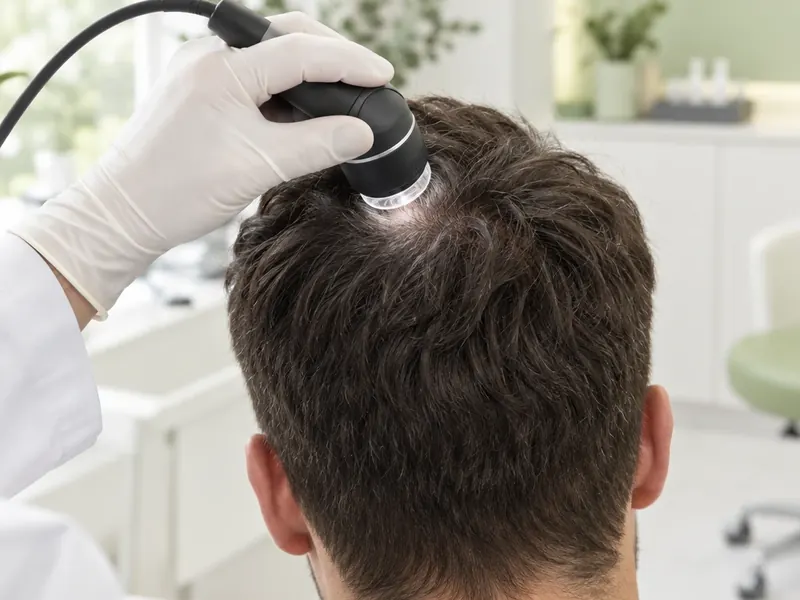
This may include an examination of the hair and scalp, questions about family history, health, stress and diet, and, where appropriate, blood tests (for example for anaemia, hormones, vitamins and minerals), trichoscopy and, occasionally, a scalp biopsy. Some patients are referred to other specialists.
Depending on the findings, treatment may involve medication, changes in diet and lifestyle or care procedures. A transplant is considered for suitable types of hair loss, most often androgenetic alopecia, when the donor area allows it. You can read more about the procedure on our hair transplant page.
How recovery usually goes
- 0-10 daysHealing: the crusts come off, the swelling goes down, the area gradually recovers
- 2-4 weeksShedding of the transplanted hairs: a normal stage, only the hairs fall out, the follicles stay in place
- 3-4 monthsGrowth begins: new hairs gradually appear, the result starts to show
- 6-9 monthsVisible density: the hair becomes thicker, the main volume and contour are visible
- 12-18 monthsFinal result: the final density and a natural hairline take shape
Consultation at City Medical Centre
City Medical Centre works with international patients. The first consultation is free and can be held online: send photos of your hair and donor area, and ask any question about grafts, methods and planning. The doctor assesses your case and names the cost, which is then fixed in the contract. A personal coordinator stays with you from your first message to the end of recovery, and photos and questions can be sent by Telegram. Find out more on the hair transplant page.
Frequently asked questions
What exactly is a graft in a hair transplant?
A graft is a small unit of tissue with one or several hair follicles, plus a little surrounding skin and the tiny vessels and nerves that feed the follicle. It is taken from the donor area and implanted where hair is thinning.
Is a graft the same as a hair?
No. A graft usually contains one to four hairs, because hair naturally grows in small groups called follicular units. That is why the number of grafts and the number of hairs in a plan are different figures.
Why does graft handling matter?
Outside the body a graft can dry out or be damaged, and a damaged follicle may not grow. Keeping grafts moist and cool, holding them gently and implanting them without long delays helps protect their viability.
Which method is better for grafts, FUE or DHI?
Both move follicular units. FUE is used for androgenetic alopecia, and a combined FUE and DHI approach is used for androgenetic alopecia and for adding density. The surgeon chooses after assessing your hair and donor area.
Can grafts be taken from another person?
No. Hair from another person would be rejected by the immune system, so only your own hair is used. This is why the amount of donor hair you have sets the limit for any transplant.
Have a question about your case? Get a free consultation
Message a coordinator on Telegram: we reply right in the chat, and you can send photos and questions there too.
- The first consultation is free, online consultations are available
- The doctor names the cost after the assessment, and it is fixed in the contract
- A personal coordinator guides you from the first message to recovery
Message our coordinator
We reply right in the chat — you can send photos
Message us on TelegramMessage us on WhatsAppBy messaging us, you agree to our Privacy Policy
In other cities
Read also
 Hair transplant
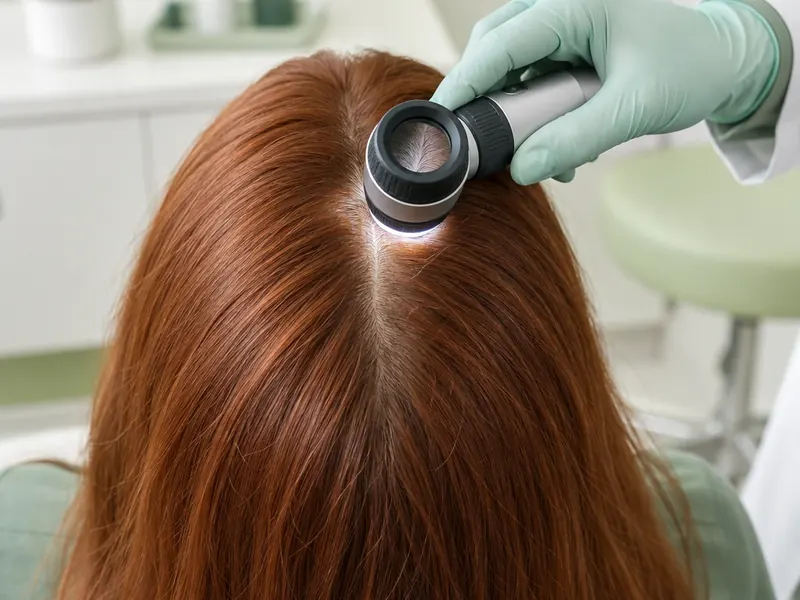
What is trichology? The science of hair health and its place in modern medicine
What trichology studies: the hair growth cycle, diagnosis, hair loss in men and women, common scalp conditions and how it relates to hair transplantation.
 Hair transplant
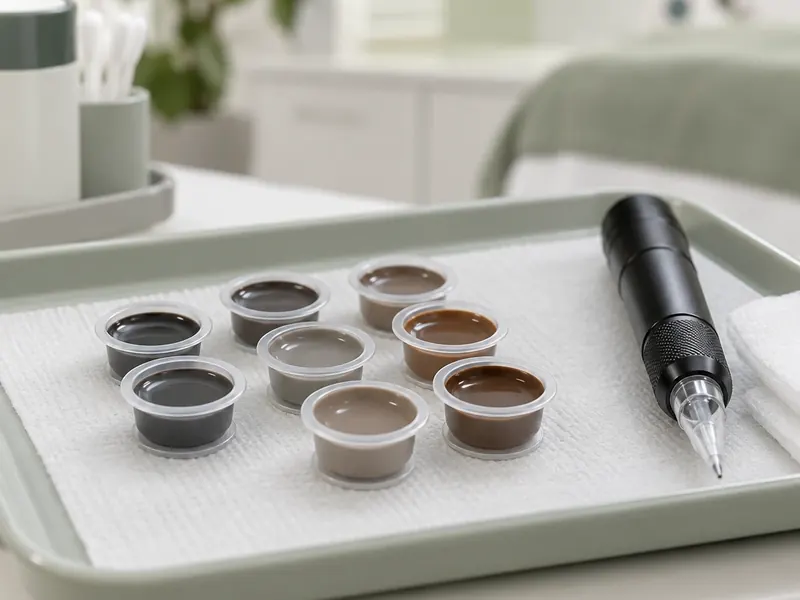
When scalp micropigmentation is the right choice: indications, limitations and how long it lasts
When scalp micropigmentation makes sense: how it works, who it may suit, contraindications, how long the effect lasts and how to decide against a transplant.
 Hair transplant
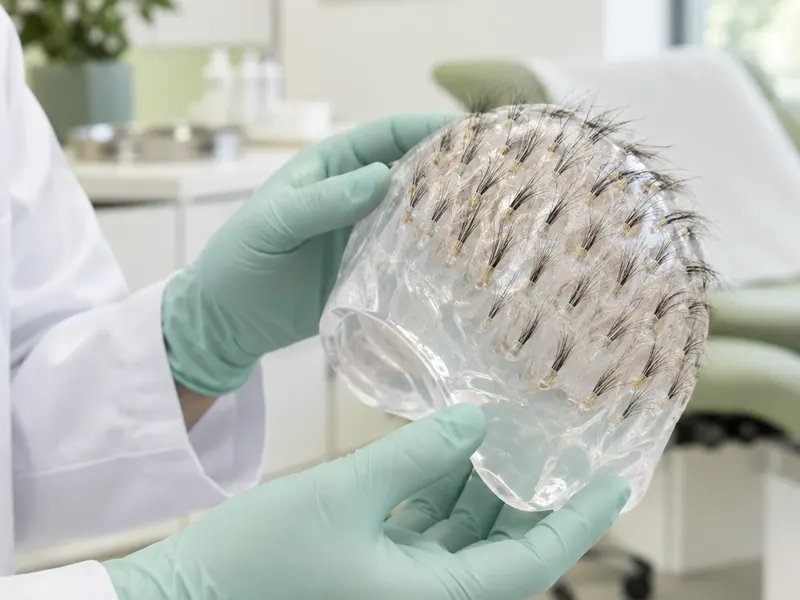
What is a hair transplant? The basics, donor hair, limits and preparation
What a hair transplant is, where donor hair comes from, who it may suit, the main contraindications and how to prepare, explained in plain language.
Medical disclaimer
This article is for general information only and is not medical advice. It does not replace a consultation with a doctor. Every procedure has contraindications and risks. Read more