


























Hair transplant7 min read
When scalp micropigmentation is the right choice: indications, limitations and how long it lasts
Thinning hair, a receding hairline and visible scalp affect millions of men and women. Treatments and surgery take time and do not suit everyone. Scalp micropigmentation offers a purely visual correction without surgery. This article explains how it works, when it tends to make sense, who should avoid it and how long the effect usually lasts.
By messaging us, you agree to our Privacy Policy
Medically reviewed by Ellina V. Goncharova, dermatovenereologist, trichologist, surgeon. Review date: .
The main points in 30 seconds
- Scalp micropigmentation places tiny dots of pigment in the skin to imitate short hair or add apparent density, without surgery.
- It suits diffuse thinning, hairline correction, a shaved-head look and disguising scars where no follicles remain.
- It is postponed with active scalp inflammation, clotting disorders, poorly controlled diabetes, pregnancy or breastfeeding.
- Two or three sessions a few weeks apart are usually needed, with touch-ups every year or two.
- It does not stimulate hair growth, so understand the cause of your hair loss first and choose a practitioner by healed results.
Key facts about the procedure
- Stay in clinicSame day
- Final result12–18 months
- AnaesthesiaLocal
- Price
$2,700from $2,200
What scalp micropigmentation is
Scalp micropigmentation, also known as trichopigmentation, is a cosmetic procedure that disguises baldness and thinning hair. It is neither permanent make-up nor a classic tattoo, but a specialised technique aimed at recreating the look of hair on the skin.
Using a digital device and very fine sterile needles, the practitioner places micro-droplets of pigment in the upper layers of the dermis. The dots are angled and spaced to imitate the natural direction of hair growth and the tiny hair shafts visible at skin level.
The visual result can be the look of a close-shaved head or an increase in the apparent density of existing hair. The procedure can also soften a hairline and reduce the contrast between scalp and hair. Unlike a tattoo, the work is usually built up in several layers and with more than one shade, which gives depth and a more natural effect.
How the technique works
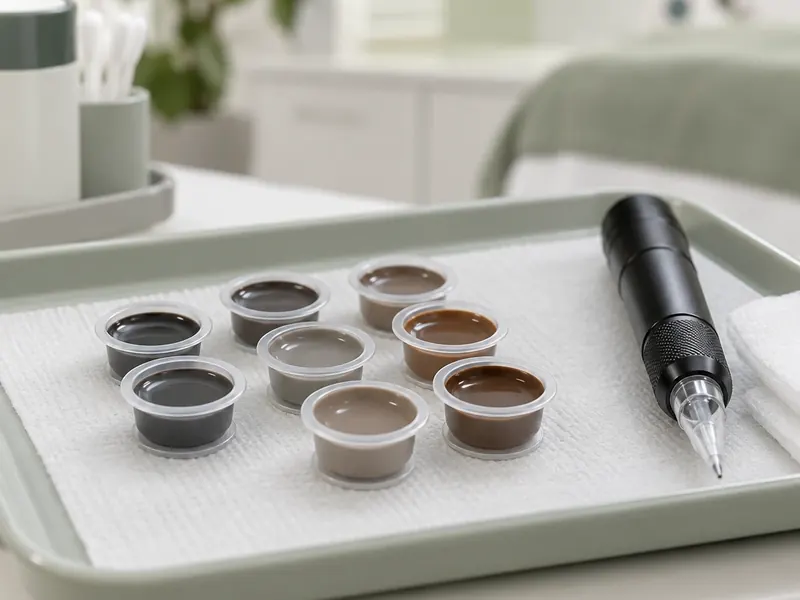
The procedure is performed with a professional device designed for fine cosmetic pigmentation, which allows controlled depth and speed. Needles should be sterile and single-use, packed in individual cartridges, which substantially lowers the risk of infection.
More on this topic: Hair Transplant, FUE Hair Transplant, DHI Hair Transplant, FUE & DHI Hair Transplant in Singapore, FUE & DHI Hair Transplant in Málaga.
Colour matching
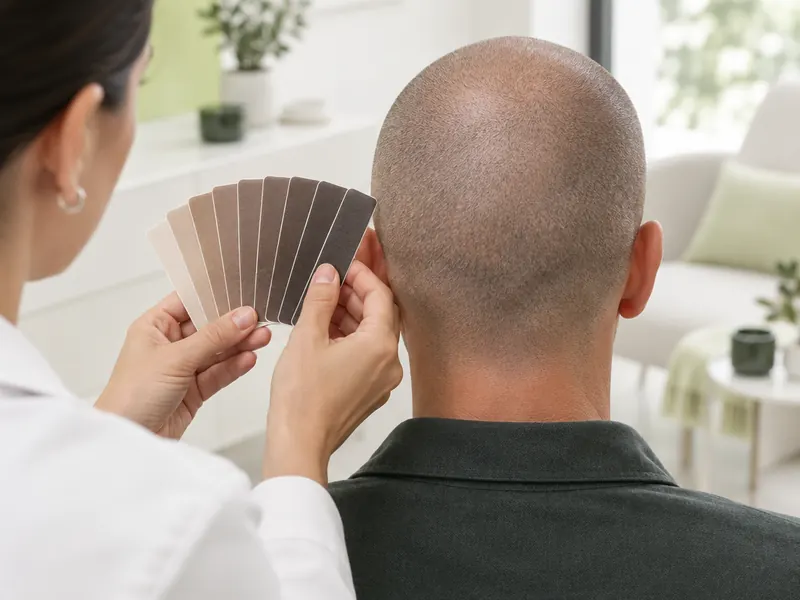
One of the key steps is choosing the colour. The practitioner often mixes several tones to match your natural hair colour, taking into account grey hair, the contrast with the skin and how the pigment may lighten over time. Pigments made specifically for the scalp are used.
Dot technique and depth
Instead of lines and solid fill, the practitioner works with a dot technique, creating many tiny dots of slightly different size and density. From a normal distance they merge into an even background that reads as short stubble. The pigment is placed superficially in the skin: too shallow and it fades quickly, too deep and it can blur or change colour. Because the work is superficial, most people describe mild discomfort, and healing usually takes a few days.

Hair transplant abroad: choose a city and clinic
Prices, the clinic and a free online consultation for each city:
When micropigmentation tends to be a good choice
Micropigmentation can be a reasonable option for people who want a quick visual improvement without surgery. Unlike a hair transplant, which involves a recovery period and depends on having enough donor hair, it gives a visible change after the first session. It is often chosen to disguise diffuse thinning, to create the look of a slightly lower or sharper hairline, or to support a shaved-head style.
Price in your country — message us on WhatsApp
WhatsAppSituations where it is commonly used
- Androgenetic hair loss. In men and women, pigment between existing hairs can reduce visible gaps and create an effect of density.
- Scars. Scars from injuries, burns, operations or an earlier hair transplant, where no follicles remain, can often be made less noticeable.
- Alopecia areata. In some cases pigment can make patches less visible, although the condition can change over time, so this needs careful discussion with a doctor.
- Hairline correction. An uneven hairline can be given a more defined, even shape.
- Naturally fine or sparse hair. Dots between hairs can make the hair look fuller.
- After medical treatment. When treatment has not given the hoped-for result, micropigmentation can serve as a cosmetic finishing step.
Limitations and contraindications
Despite its advantages, the method has clear limits and is not suitable for everyone.
When it is usually postponed or avoided
- active inflammation or skin disease on the scalp, such as a flare of psoriasis, dermatitis or eczema;
- allergy to pigment components or to local anaesthetic products;
- blood clotting disorders;
- poorly controlled diabetes;
- pregnancy and breastfeeding;
- ongoing treatment for cancer or other serious illness, epilepsy, infectious diseases and some other conditions, where a doctor should decide whether the procedure is appropriate.
When a doctor's opinion is needed first
- a tendency to keloid scars;
- chronic illnesses in a flare-up;
- taking anticoagulants.
What it cannot do
Micropigmentation does not stimulate hair growth. It is a cosmetic correction and does not replace diagnosis and treatment of the cause of hair loss.
How long the effect lasts
A first session typically takes a few hours. The pigment settles in the skin over the following weeks, and two or three sessions a few weeks apart are usually needed for the final result.
After a full course, the effect commonly lasts for several years, although estimates vary widely between practitioners and between patients. Several factors influence durability:
- Skin type. On oily skin pigment may fade faster.
- Quality of pigment and technique. Correct depth and suitable materials matter.
- Aftercare. Following instructions during healing, including avoiding sun, saunas and swimming pools.
- Lifestyle. Frequent sun exposure without protection and some cosmetic treatments, such as laser resurfacing or chemical peels, can speed up fading.
Over time the colour usually becomes lighter and softer. Touch-up sessions every year or two are commonly recommended to keep the look even.
Benefits and who may consider it
- a visible change from the first session;
- a natural look when the work is done well;
- no surgery and usually a short recovery;
- an effect that lasts for years, with touch-ups;
- a way to disguise scars that other methods cannot address.
It may be worth considering if medical treatment has not helped enough, if a transplant is not suitable for you or you prefer to avoid surgery, if you want to disguise scars, or if you simply want a consistently neat look without styling.
How to make a decision
The decision should be a considered one. Start by understanding the cause of your hair loss, since some causes can be treated. Then choose a qualified practitioner: look at a portfolio of healed results, check that sterile single-use needles and scalp-specific pigments are used, and attend an in-person consultation to discuss expectations and aftercare.
Ask whether a small test area is possible to check the shade.
It also helps to compare the alternatives honestly. A hair transplant moves your own follicles, which continue to grow as real hair, but it is surgery and depends on the donor area. FUE is commonly used for androgenetic hair loss, and a combined FUE and DHI approach can also be used to add density. Micropigmentation, by contrast, changes only the appearance of the skin. Some people combine the two.
How recovery usually goes
- 0-10 daysHealing: the crusts come off, the swelling goes down, the area gradually recovers
- 2-4 weeksShedding of the transplanted hairs: a normal stage, only the hairs fall out, the follicles stay in place
- 3-4 monthsGrowth begins: new hairs gradually appear, the result starts to show
- 6-9 monthsVisible density: the hair becomes thicker, the main volume and contour are visible
- 12-18 monthsFinal result: the final density and a natural hairline take shape
Consultation at City Medical Centre
City Medical Centre works with international patients and specialises in hair transplantation. If you are comparing a cosmetic solution with moving your own hair, you can book a free first consultation, which can be held online. Send photos of your hair and donor area, and the doctor will assess whether a transplant is a realistic option for you.
The cost is named after this assessment and fixed in the contract, a personal coordinator stays with you from your first message to the end of recovery, and questions and photos can be sent by Telegram. More details are on the hair transplant page.
Frequently asked questions
Who is scalp micropigmentation best suited to?
It may suit people with thinning or receding hair who want a visual improvement without surgery, people who shave their heads, and those with scars where hair no longer grows. It is not a treatment, so the cause of hair loss should be assessed first.
How many sessions are usually needed?
Most people need two or three sessions a few weeks apart. The pigment settles in the skin between sessions, and later sessions refine density and shade. Touch-ups every year or two are commonly recommended to keep the result even.
Can micropigmentation hide transplant or surgical scars?
Often it can make scars less noticeable by adding dots that blend with the surrounding hair. The result depends on the scar texture and colour. A doctor should confirm that the scar is fully healed and stable before the procedure.
Does the pigment turn blue or green over time?
With suitable scalp pigments and correct depth, the colour usually fades to a lighter, softer shade rather than changing tone. Pigment placed too deep or of poor quality can blur or shift colour, which is why the choice of practitioner matters.
Is micropigmentation an alternative to a hair transplant?
They do different things. Micropigmentation changes the look of the skin without adding hair, while a transplant moves your own follicles, which grow as real hair. Which option, if any, suits you depends on the cause of hair loss and the donor area.
Have a question about your case? Get a free consultation
Message a coordinator on Telegram: we reply right in the chat, and you can send photos and questions there too.
- The first consultation is free, online consultations are available
- The doctor names the cost after the assessment, and it is fixed in the contract
- A personal coordinator guides you from the first message to recovery
Message our coordinator
We reply right in the chat — you can send photos
Message us on TelegramMessage us on WhatsAppBy messaging us, you agree to our Privacy Policy
In other cities
Read also
 Hair transplant
Who can benefit from a hair transplant, and when is it usually declined?
Who a hair transplant can help, from male and female pattern hair loss to scars, and why clinics sometimes decline or postpone the procedure.
 Hair transplant
Why am I going bald? How to tell normal shedding from hair loss
Why hair falls out, how to tell normal daily shedding from real hair loss, the common causes in men and women and when it is time to see a doctor.
 Hair transplant
Where does hair for a transplant come from? From the scalp to the beard
Where donor hair for a transplant comes from: the back and sides of the head, beard and body hair, how grafts are taken and what makes a good donor area.
Medical disclaimer
This article is for general information only and is not medical advice. It does not replace a consultation with a doctor. Every procedure has contraindications and risks. Read more