


























Joint treatment8 min read
PRP injections for joints: preparation, the procedure and what to expect afterwards
Platelet-rich plasma (PRP) is prepared from your own blood and injected into a painful joint to calm inflammation and support the tissues inside it. This guide explains which joint problems it is used for, how to prepare, what happens during the visit, how the joint usually feels afterwards, when an effect can be expected and what the research can and cannot tell you yet.
By messaging us, you agree to our Privacy Policy
The main points in 30 seconds
- PRP is plasma from your own blood, rich in platelets, injected into the joint under ultrasound in a visit of around an hour.
- Tell the doctor about blood thinners and anti-inflammatory painkillers; some may be paused, but never on your own.
- The joint often aches for a few days; pain usually eases over the first month, with the full effect around six months.
- PRP works best in mild to moderate osteoarthritis, and there is no reliable evidence that it regrows cartilage.
- It is not done with cancer, pregnancy, clotting disorders or an acute infection; fever or a cold means postponing.
PRP joint injections: what to expect in brief
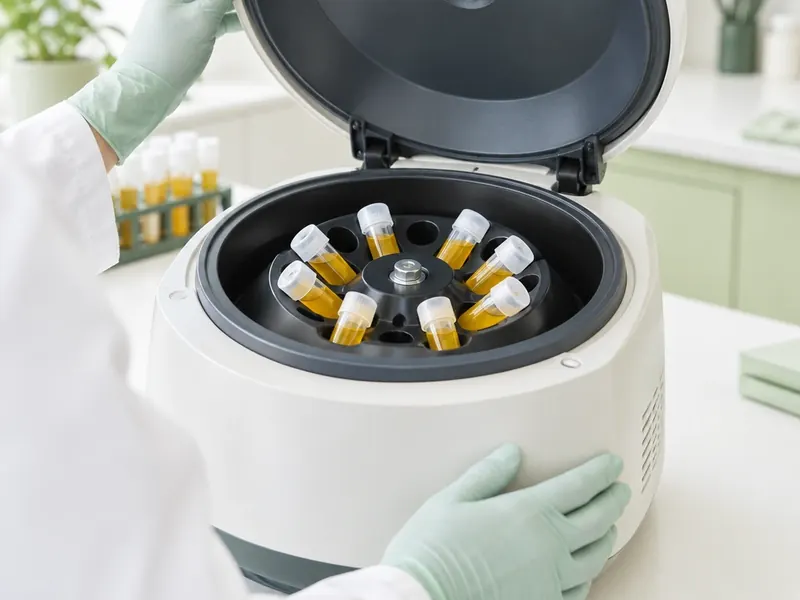
A PRP injection is an outpatient procedure. A small amount of blood is taken from your arm, spun in a centrifuge to concentrate the platelets, and the resulting plasma is injected into the joint. The whole visit usually takes around an hour, and you walk out on your own.
It is not a quick painkiller. The joint may ache more for a few days, and any improvement builds up gradually over weeks and months. Some people notice a clear reduction in pain, others only a modest one, and some none at all. The doctor can tell you how likely a benefit is only after examining the joint and looking at your scans.
What PRP is and which joints it is used for
Blood consists of plasma and cells: red cells, white cells and platelets. Platelets are known for their role in clotting, but they also carry proteins called growth factors that take part in tissue repair. In PRP the concentration of platelets is several times higher than in ordinary blood. The aim is to reduce pain and inflammation and to create better conditions for the tissues inside the joint.
PRP is most often considered for:
- Knee: early or moderate cartilage wear (osteoarthritis), pain on stairs and after walking, some meniscus problems.
- Shoulder: pain when raising the arm, wear of the joint and irritation of the surrounding tendons.
- Hip: early osteoarthritis, groin pain, reduced rotation.
- Ankle: pain and stiffness after sprains and old injuries, early wear of the joint.
It is also used for small joints and for tendon problems around joints, such as tennis elbow. PRP does not rebuild worn-out cartilage and does not replace surgery when a joint is severely destroyed. It is best seen as a way to ease symptoms and to postpone more invasive treatment where that is realistic.
How to prepare for the injection
Preparation is simple, but it matters, because the quality of the plasma depends partly on the state of your blood on the day.
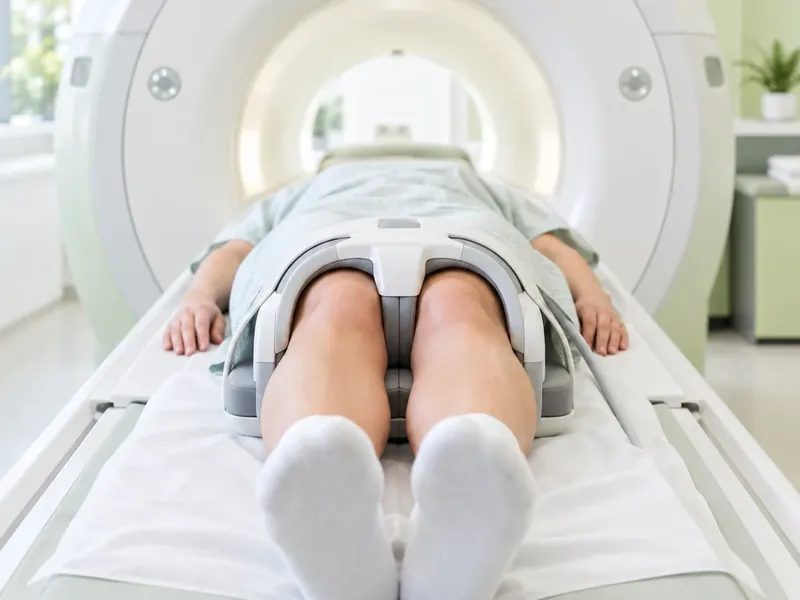
- Scans and reports. Recent X-rays, MRI or ultrasound of the joint help the doctor judge the stage of the problem. If you already have them, send them before the visit.
- Medicines. Tell the doctor about everything you take, especially blood thinners and anti-inflammatory painkillers. Anti-inflammatory drugs can interfere with the way platelets work, so the doctor may ask you to pause them for a while before and after the injection. Do not stop any prescribed medicine on your own.
- Tests. The doctor tells you in advance whether any blood tests are needed.
- On the day. Eat a normal light meal and drink enough water: it makes the blood draw easier and helps avoid feeling faint. Wear loose clothing that gives easy access to the joint.
- Travel home. You can usually walk normally, but for a knee, hip or ankle injection it is wise not to plan a long drive or a busy day straight afterwards.
How the procedure goes, step by step
- Examination. The doctor examines the joint, reviews your scans, checks for contraindications and confirms that PRP makes sense in your case.
- Blood draw. A small amount of blood is taken from a vein, much like a routine blood test.
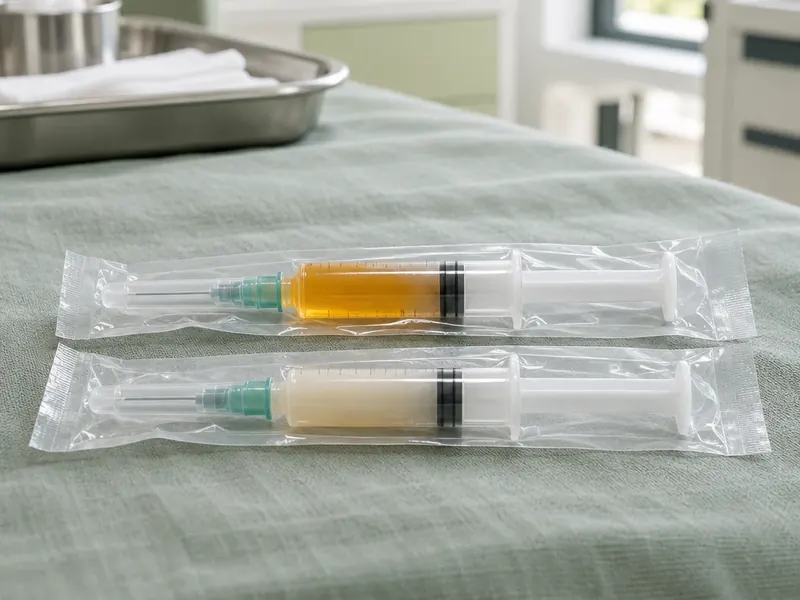
- Centrifuge. The tube is spun so that the blood separates into layers. The layer rich in platelets is collected for the injection.
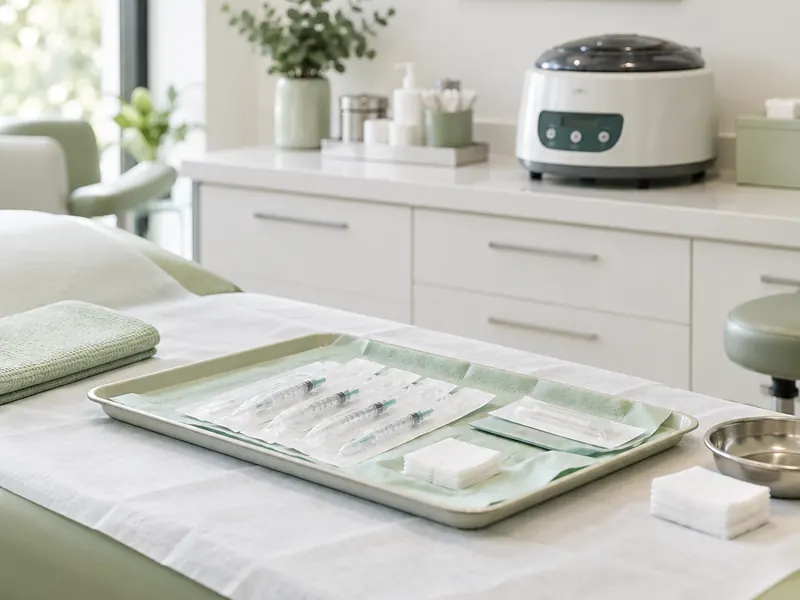
- Preparing the skin. The skin over the joint is disinfected. A local anaesthetic may be used to make the puncture more comfortable.
- Injection under ultrasound guidance. The plasma is injected into the joint through a thin needle. Ultrasound shows the doctor where the needle tip is, which helps place the plasma precisely.
- Dressing and short rest. A small dressing is placed over the puncture site, and you rest for a short while before going home.
The injection itself usually takes only a few minutes. Most people describe a feeling of pressure or fullness in the joint rather than sharp pain.
After the injection: sensations, course and timing
For the first few days the joint often aches and may feel swollen or stiff. This is an expected reaction to the injection and usually settles within a week. Rest the joint for a day or two, avoid heavy loads and sport at first, and use a cold pack if the doctor allows it.
Ask the doctor which painkiller is acceptable, because anti-inflammatory drugs may be best avoided in this period.
PRP is usually given as a course rather than a single injection. The number of injections and the interval between them are set by the doctor after assessing the joint; a course of one to three injections a few weeks apart is common. Some people have a repeat course later if the first one helped.
- First 1 to 3 days
- Aching, a feeling of fullness, sometimes mild swelling; normal daily activity is usually possible
- First week
- Discomfort settles; gentle movement, no heavy loads or sport
- First month
- Pain usually starts to ease; exercise therapy is gradually stepped up
- Around 3 months
- Mobility and activity usually improve if the treatment is working
- Around 6 months
- The full effect has usually developed; the doctor reviews the result and the plan
How long an effect lasts differs from person to person and depends on the stage of the condition, body weight, activity and general health. In knee osteoarthritis some studies report benefits lasting up to about two years, but no one can promise a fixed result.
What the evidence says, honestly
PRP is widely used, but the research behind it is still developing. The clearest data come from knee osteoarthritis: a growing number of studies show that PRP can reduce pain and improve function in mild to moderate stages. At the same time, UK guidance notes that PRP for knee osteoarthritis raises no major safety concerns but that the evidence on how well it works is limited in quality.
There are several reasons for caution:
- PRP preparations differ between systems, for example in platelet concentration and white cell content, which makes studies hard to compare.
- For the hip, shoulder and ankle there is less high-quality research than for the knee.
- Results are better in earlier stages; in advanced, bone-on-bone arthritis the benefit is usually small.
- There is no reliable evidence that PRP makes lost cartilage grow back.
A good doctor will discuss these uncertainties openly and will not present PRP as a cure. If you are also weighing up PRP against cell therapy for knee osteoarthritis, we compare the two methods in a separate article. You can read how the clinic uses PRP and related methods on the joint treatment page.
Contraindications and combining PRP with exercise
When PRP is not done
- cancer;
- pregnancy and breastfeeding;
- blood clotting disorders;
- acute infection, including infection in or near the joint;
- a flare-up of a serious chronic illness, or serious heart, kidney or liver disease.
Fever, a cold or flu, or inflamed skin over the joint are temporary reasons to postpone the injection until you recover.
Why exercise therapy still matters
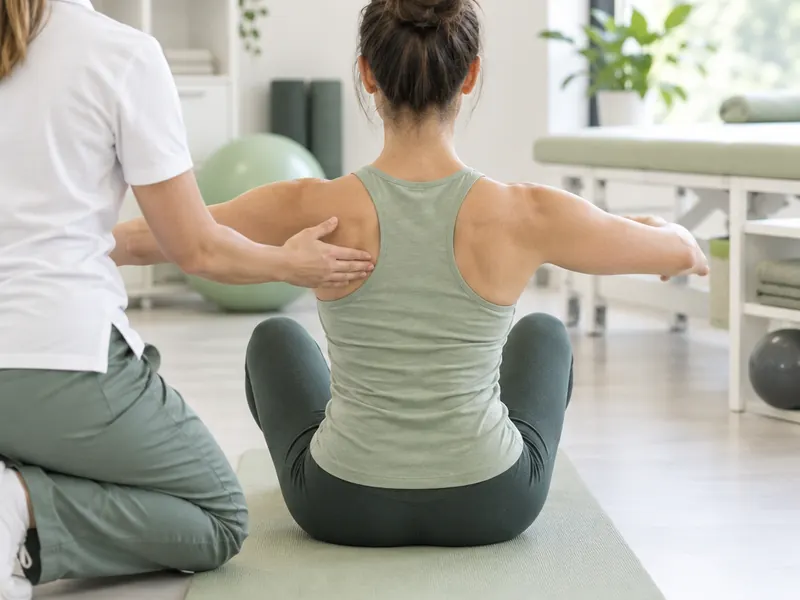
Exercise and weight management remain the foundation of care for joint osteoarthritis, and PRP works best as part of that plan rather than instead of it. Stronger muscles around the knee, hip, shoulder or ankle take load off the joint and help the benefit last.
- In the first days: gentle range-of-motion movements, walking as comfort allows.
- From about the second week: a gradual return to strengthening exercises agreed with the doctor or physiotherapist.
- Later: low-impact activity such as cycling, swimming or brisk walking; high-impact sport only once the doctor agrees.
The doctor gives individual advice on exercise and load for the first weeks, based on the joint and your level of activity.
Consultation at City Medical Centre
City Medical Centre works with international patients. The first consultation is free and can be held online: send your X-rays, MRI or ultrasound reports and describe your symptoms, and the doctor will tell you whether PRP, or another method used at the clinic, suits your joint. Every injection is done under ultrasound guidance, and follow-up visits after about one, three and six months let the doctor see how the joint responds. The cost is named after the assessment and fixed in the contract.
A personal coordinator stays with you from your first message to the end of recovery, and scans and questions can be sent by Telegram. Find out more on the joint treatment page.
Sources
- AAOS OrthoInfo — Platelet-Rich Plasma (PRP)
- NICE — Platelet-rich plasma injections for knee osteoarthritis (HTG497, formerly IPG637)
- Versus Arthritis — Osteoarthritis of the knee
- PubMed / NCBI — Core Recommendations for Osteoarthritis Care: Systematic Review of Clinical Practice Guidelines (2023)
- PubMed / NCBI — Managing osteoarthritis (Aust Prescr, 2015)
Medical disclaimer. This article is for general information only and is not medical advice. It does not replace a consultation with a doctor. Every procedure has contraindications and risks. Read more · How we prepare and review medical content
Frequently asked questions
Is a PRP injection into the joint painful?
Most people feel a brief sting from the needle and a sense of pressure or fullness as the plasma goes in. A local anaesthetic can make the puncture more comfortable. The joint often aches more for one to three days afterwards; this is an expected reaction and usually settles within a week.
How many PRP injections will I need?
It depends on the joint and the stage of the problem, so the doctor decides after examining you and reviewing your scans. A course of one to three injections a few weeks apart is common. Some patients have a repeat course later if the first one helped.
When will I feel the effect of PRP?
Not straight away. Pain usually starts to ease during the first month, mobility tends to improve over about three months, and the full effect usually develops over around six months. The response varies, and some people notice little change.
Can PRP regrow cartilage?
There is no reliable evidence that it does. PRP is used to reduce pain and inflammation and to support the tissues inside the joint. It works best in early and moderate stages and does not replace surgery when a joint is severely damaged.
Can I exercise after a PRP injection?
Yes, but gradually. Rest the joint for a day or two, then start gentle movement and walking. Strengthening exercises are usually added from about the second week, and high-impact sport only once the doctor agrees. Exercise therapy helps the effect of PRP last longer.
Should I stop my medicines before PRP?
Tell the doctor about everything you take. Anti-inflammatory painkillers can interfere with platelet function, so the doctor may ask you to pause them for a while before and after the injection. Never stop blood thinners or other prescribed medicines without your doctor's advice.
Have a question about your case? Get a free consultation
Message a coordinator on Telegram: we reply right in the chat, and you can send photos and questions there too.
- The first consultation is free, online consultations are available
- The doctor names the cost after the assessment, and it is fixed in the contract
- A personal coordinator guides you from the first message to recovery
Message our coordinator
We reply right in the chat — you can send photos
Message us on TelegramMessage us on WhatsAppBy messaging us, you agree to our Privacy Policy
Read also
 Joint treatment
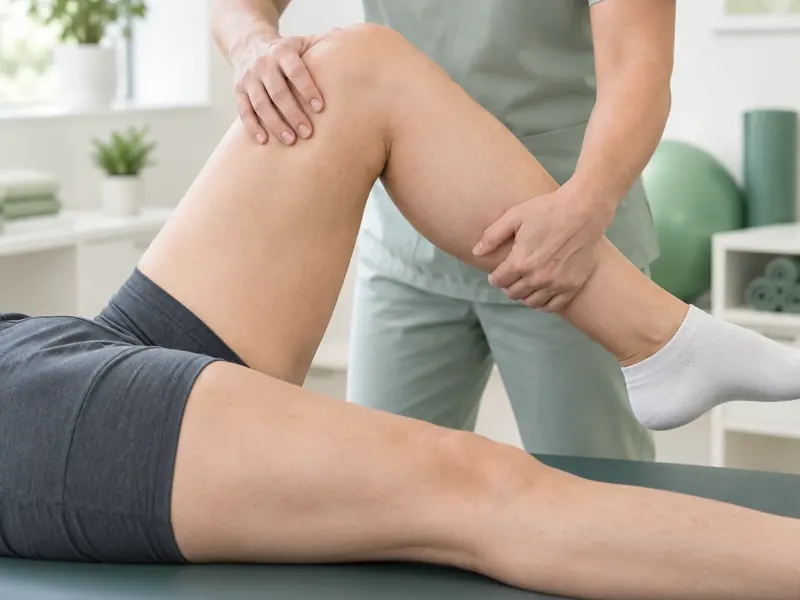
Rehabilitation after joint injury or surgery: how regenerative therapy fits in
How joints recover after injury or surgery, the stages of rehabilitation, and where PRP and SVF injections may fit in alongside exercise and physiotherapy.
 Joint treatment
X-ray, MRI or ultrasound: which joint scans a doctor needs before treatment
Which joint scans a doctor needs before PRP or SVF: what X-ray, MRI and ultrasound each show, which suits your joint, and how to send your scans from abroad.
 Osteoarthritis treatment
PRP or SVF therapy for knee osteoarthritis: how the two methods compare
PRP or SVF cell therapy for knee osteoarthritis: how each is prepared, which stage it suits, what to expect and when, contraindications and recovery.