


























Hair transplant6 min read
How to hide a bald spot: short-term cover-ups for men and a long-term option
Hair loss is a common and natural process, but a visible bald spot can make many men feel less confident. Before considering medical options, most people try to disguise it. This article reviews the everyday ways to hide a bald spot, explains their limits and looks at when a hair transplant may be a longer-lasting option.
By messaging us, you agree to our Privacy Policy
Medically reviewed by Ellina V. Goncharova, dermatovenereologist, trichologist, surgeon. Review date: .
The main points in 30 seconds
- A bald spot in men is most often hereditary androgenetic alopecia, but see a doctor if it grows quickly, appears suddenly or the scalp is sore.
- A short, textured haircut usually hides thinning better than combing long strands over the area.
- Hair fibres, scalp concealers, hats and hairpieces disguise a bald spot, but only for the day and with some upkeep.
- A transplant moves your own resistant hair from the back and sides, and the result appears gradually over about a year.
- A transplant does not treat the cause, so native hair may keep thinning and supportive treatment is often advised.
Key facts about the procedure
- Stay in clinicSame day
- Final result12–18 months
- AnaesthesiaLocal
- Price
$2,700from $2,200
Why a bald spot is worth understanding before hiding it
In men, a bald spot on the crown or a receding hairline is most often caused by androgenetic alopecia, a hereditary type of hair loss that usually progresses slowly over years. Other causes are possible too: patchy hair loss, scalp conditions, stress or health problems can also make hair thinner in one area.
Price in your country — message us on WhatsApp
WhatsAppDisguising a bald spot is a perfectly reasonable choice, and many men are happy with it for a long time. Still, if the area is growing quickly, has appeared suddenly or the scalp is itchy, red or painful, it is worth seeing a doctor first. Some causes can be treated, and early advice gives you more options.
Everyday ways to disguise a bald spot
A well-chosen haircut
More on this topic: Hair Transplant, Eyebrow Transplant, Hair Transplant for Women, FUE & DHI Hair Transplant in Singapore, FUE & DHI Hair Transplant in Málaga.
Short haircuts such as a crop, a Caesar cut or a classic short back and sides often hide thinning better than long hair. When hair is short, the contrast between thick and thin areas becomes less noticeable, and a textured cut can make the top look fuller. Combing long strands over a bald area tends to draw attention to it, especially in wind or after a swim.
Hair fibres
Hair building fibres are a cosmetic powder made of tiny fibres that cling to existing hair and make it look denser. They work best when some hair remains in the area and are easy to use every day. They can come off in heavy rain, with sweat or when you touch your head, and they wash out with shampoo.
Scalp concealers
Tinted sprays, powders and crayons for the scalp reduce the contrast between skin and hair by colouring the skin in a shade close to your hair colour. They are temporary, need to be applied carefully and can leave marks on pillows and collars.
Hats and accessories
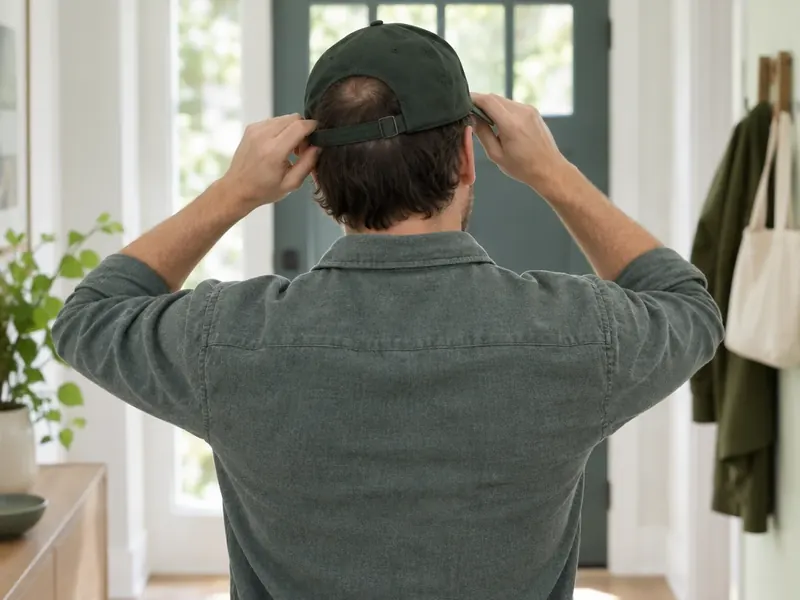
Caps, hats and bandanas can become part of your style and cover a bald spot during everyday life. They also protect the scalp from the sun. The obvious limitation is that they are not appropriate in every setting.
Hairpieces and hair systems
Partial hairpieces and hair systems can cover larger areas. Modern versions can look natural, but they require regular maintenance, fixing and replacement.
Cosmetic scalp pigmentation
Some specialised studios offer cosmetic pigmentation of the scalp, which imitates the look of very short hair. It does not add hair and suits people who are happy with a shaved or very short look. Such procedures should be discussed with a qualified specialist.

Hair transplant abroad: choose a city and clinic
Prices, the clinic and a free online consultation for each city:
Caring for the hair you have
- Gentle hair care. Mild shampoos and conditioners keep the remaining hair in good condition and can make it look fuller, although they do not stop hereditary hair loss.
- Sun protection. A thinning scalp burns easily, so use a hat or sunscreen suitable for the scalp.
- Medical treatments. Scalp injections, PRP and medication may be considered for some types of hair loss. Medicines are used only as prescribed by a doctor, and the choice depends on the diagnosis.
- A specialist opinion. A dermatologist or another doctor who deals with hair problems can identify the cause and suggest a suitable approach.
Hair transplantation as a long-term option
The methods above disguise a bald spot for the day or for a period of time. A hair transplant takes a different approach: follicles are moved from the donor area at the back and sides of the head, where hair is usually more resistant to pattern loss, to the thinning area. For androgenetic alopecia the FUE method is used, and the combined FUE and DHI approach is used both for androgenetic alopecia and to add density. You can read more on the hair transplant page.
What a transplant can offer
- A natural look. Your own hair is used, and the surgeon plans the direction and density of the grafts so that the result blends in with the surrounding hair.
- A long-lasting result. In most patients, transplanted hair continues to grow for many years because it comes from a more resistant zone.
- Less visible scarring with FUE. Follicles are taken one by one, leaving small dot-like marks rather than a linear scar.
- Everyday life without daily cover-ups. Once the hair has grown, many men no longer need fibres, concealers or hats to feel comfortable.
What to keep in mind
- A transplant does not treat the cause of hair loss. Native hair around the transplanted area may continue to thin, so doctors often recommend supportive treatment.
- The amount of hair that can be moved depends on the donor area, and not everyone is a suitable candidate.
- The first weeks require careful aftercare, and the final result becomes visible gradually, usually over about a year.
- A transplant can be combined with other treatments, such as PRP, if the doctor considers it useful.
How to choose the right approach
If the bald spot is small and stable, a good haircut or hair fibres may be all you need. If it keeps growing, it makes sense to find out the cause and discuss treatment. If hair in the area has been lost and you want a longer-term solution, a consultation with a hair transplant surgeon will show whether you are a candidate and what result is realistic.
Many men start with cosmetic methods and later move on to a transplant, and there is no wrong order.
Getting ready for a consultation: what to prepare and what to ask
Once you have tried a shorter cut or fibres, the next sensible step is not another cosmetic product but one honest conversation with a surgeon. At City Medical Centre that conversation is free and happens online, so preparing for it well costs you nothing but a little time.
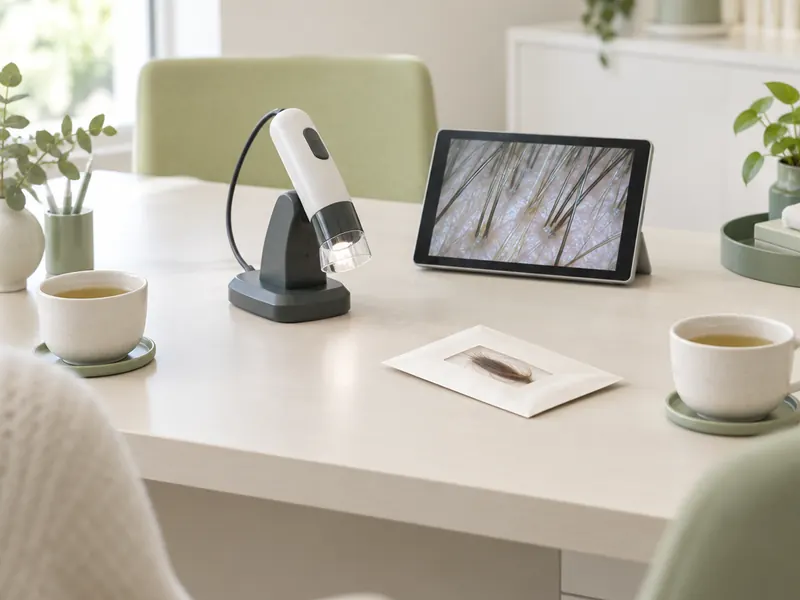
Preparation is simple. Take photos of the front, the crown and the back of your head in daylight, without a hat and without styling products, and ask someone to help with the crown if your own photos keep missing the angle. Then write down a short history for yourself: when the thinning started, how fast it has moved, whether fathers or uncles on either side lost hair early, and which shampoos, topical products or medicines you have already tried. Anything you have used on prescription is worth mentioning by name.
With that in front of the surgeon, the questions almost ask themselves.
- What is causing the loss in my case, and can that cause be treated?
- What can realistically be achieved in my situation, and what cannot?
- What happens if I simply wait a year and keep covering the area?
- Does supportive treatment make sense for me alongside anything else?
Nobody will quote a graft count from a price list. The surgeon looks at the donor area first, because every transplanted graft has to come from there, and only then talks about what a plan could look like. If the honest answer is that cover-ups remain the better option for now, you will hear that too, and you will not have paid anything to find out.
Mistakes that make a bald spot more visible
Most men who try to hide thinning make at least one of the same mistakes, and all of them are easy to correct once named.
The first is growing hair long and combing it over the area. It feels like a solution, but long strands separate in wind, rain and after a swim, and a parted curtain over a bald patch draws more attention than the patch itself. A short, textured cut does the opposite: it lowers the contrast between dense and sparse zones.
The second is fibres applied carelessly. A shade that is slightly off, powder pressed onto bare skin instead of onto existing hair, or a layer thickened again and again over a week all read as artificial from close range. Fibres behave best as a light finishing touch on dry hair, refreshed after washing rather than piled up.
The third is forgetting the scalp itself. Skin that peels after a sunburn changes colour and texture, which makes any thinning area stand out more, and a scalp with less cover burns faster than most people expect. A hat or a sunscreen that suits the scalp is part of hiding a bald spot, not a separate chore.
The last one is spending on products that promise regrowth without anyone having looked at the scalp. If the cause has never been diagnosed, money goes on guesses. Itching, redness or soreness in the area is a signal to stop cosmetics and ask a doctor first, because some causes of hair loss can be treated and the earlier that happens, the more options stay open.
Cover-ups and a transplant side by side: how men actually combine them
Choosing a transplant does not mean throwing the fibres away the same day, and staying with cover-ups does not close the door to surgery later. In practice the two overlap for a while, and knowing how that year looks makes the decision calmer.
After the operation the scalp needs careful care first: the crusts heal, the swelling settles, and only then does the routine return to normal. In the early weeks the team tells each patient when washing, products and headwear are fine again, because this depends on how the skin is healing. Then comes a stage that surprises many men: the transplanted hairs shed while the follicles stay in place. The area can look thinner than before the operation, and men who plan to keep working in front of people often use fibres or their usual haircut to bridge exactly this stretch.
New growth starts gradually, and over the following months the area thickens, so the cosmetics step back on their own: less fibre, shorter mirror time, and eventually days when the old routine is simply forgotten. Sport, rain and swimming stop being scheduling problems somewhere along the way, which is the part many patients say mattered more than the mirror.
If you would like to know where you personally stand, write to a coordinator on Telegram or WhatsApp; they reply around the clock, the first consultation is free, and the photos you already take for choosing a fibre shade are almost exactly the photos the surgeon needs.
How recovery usually goes
- 0-10 daysHealing: the crusts come off, the swelling goes down, the area gradually recovers
- 2-4 weeksShedding of the transplanted hairs: a normal stage, only the hairs fall out, the follicles stay in place
- 3-4 monthsGrowth begins: new hairs gradually appear, the result starts to show
- 6-9 monthsVisible density: the hair becomes thicker, the main volume and contour are visible
- 12-18 monthsFinal result: the final density and a natural hairline take shape
Consultation at City Medical Centre
City Medical Centre works with international patients. The first consultation is free and can be held online: send photos of the bald area and your donor area, and the doctor will assess whether a transplant is a reasonable option for you. The cost is named after the assessment and fixed in the contract. A personal coordinator stays with you from your first message to the end of recovery, and photos and questions can be sent by Telegram. Find out more on the hair transplant page.
Frequently asked questions
Which haircut hides a bald spot best?
Short haircuts such as a crop, a Caesar cut or a short back and sides usually work best, because they reduce the contrast between thick and thin areas. A barber can add texture on top so it looks fuller. Combing long hair over a bald area tends to draw attention to it.
Are hair fibres safe to use every day?
For most people, cosmetic hair fibres are fine for daily use. They sit on the hair and wash out with shampoo. They work best when some hair remains in the area. If the scalp becomes irritated, stop using them and ask a doctor.
Can a bald spot be treated rather than hidden?
It depends on the cause. Some types of hair loss respond to treatment chosen by a doctor, and medication is used only as prescribed. When follicles have been lost, a hair transplant may be considered if the donor area is suitable.
Is a hair transplant a long-term solution?
In most patients, transplanted hair continues to grow for many years because it comes from a zone more resistant to pattern loss. However, a transplant does not stop the native hair around it from thinning, so supportive treatment is often recommended.
How do I know if I am a candidate for a hair transplant?
A doctor assesses the type and extent of hair loss and the condition of the donor area. You can start with an online consultation by sending photos. The surgeon then explains whether a transplant is suitable and what result is realistic.
Do hats make a bald spot worse?
Ordinary daily hat wearing does not cause hereditary hair loss; the usual cause is genetics and hormones, which a doctor can confirm during an examination. Keep headwear clean and not painfully tight, and feel free to keep using it as a cover-up while you decide on anything else.
Should I apply fibres if my scalp is irritated?
No. Itching, redness or soreness is a reason to pause cosmetics and see a doctor first, because fibres and concealers sit on the skin and can make irritation worse. Once the cause is found and treated, cover-ups can usually return.
What photos should I send for an online consultation?
Take the front, the crown and the donor area at the back of the head in daylight, without a hat or styling products. Add a short note on when the thinning started, any family history of early hair loss and the medicines or products you have tried.
Can I keep using fibres after a transplant?
Usually yes, once the scalp has healed and the team confirms the skin is ready. Many men use their usual cover-ups through the period when the transplanted hairs shed and regrow, and then need them less as the new hair thickens.
Have a question about your case? Get a free consultation
Message a coordinator on Telegram: we reply right in the chat, and you can send photos and questions there too.
- The first consultation is free, online consultations are available
- The doctor names the cost after the assessment, and it is fixed in the contract
- A personal coordinator guides you from the first message to recovery
Message our coordinator
We reply right in the chat — you can send photos
Message us on TelegramMessage us on WhatsAppBy messaging us, you agree to our Privacy Policy
Read also
 Hair transplant
How to prepare for a hair transplant: steps to take before the procedure
How to prepare for a hair transplant: the consultation, medicines to discuss, smoking and alcohol, planning recovery time and getting ready for aftercare.
 Hair transplant
How to stimulate hair growth: factors, medical options and when to see a specialist
What affects hair growth, which medical options may support it, when to see a specialist and where a hair transplant fits when hair is lost for good.
 Hair transplant
How to increase hair density: from daily care to medical treatment and hair transplantation
Why hair loses density and what can realistically help: daily care, nutrition, medical treatments prescribed by a doctor and hair transplantation.
Medical disclaimer
This article is for general information only and is not medical advice. It does not replace a consultation with a doctor. Every procedure has contraindications and risks. Read more