
























Hair transplant6 min read
Hair transplant methods explained: from outdated techniques to modern FUE and DHI
Hair transplantation has come a long way from the obvious plugs of the past. This article walks through the methods in the order they appeared, from punch grafts and minigrafts to the strip technique, motorised and manual FUE and DHI, and explains why the older approaches were abandoned and what matters when a method is chosen for you.
By messaging us, you agree to our Privacy Policy
Medically reviewed by Ellina V. Goncharova, dermatovenereologist, trichologist, surgeon. Review date: .
The main points in 30 seconds
- Early punch grafts and minigrafts gave a tufted, doll's-hair look and visible scars, so they are now obsolete.
- The strip method (FUT) leaves a long linear scar and usually means two to three weeks before sport and physical work.
- In manual FUE grafts are taken one by one; the small wounds usually heal within about a week and leave tiny dot-like marks.
- DHI places grafts with an implanter pen, and FUE and DHI are often combined for the hairline and for adding density.
- New hair usually starts growing two to three months after the procedure, with the final result after about a year.
Key facts about the procedure
- Stay in clinicSame day
- Final result12–18 months
- AnaesthesiaLocal
- Price
$2,700from $2,200
Why hair transplant methods have changed
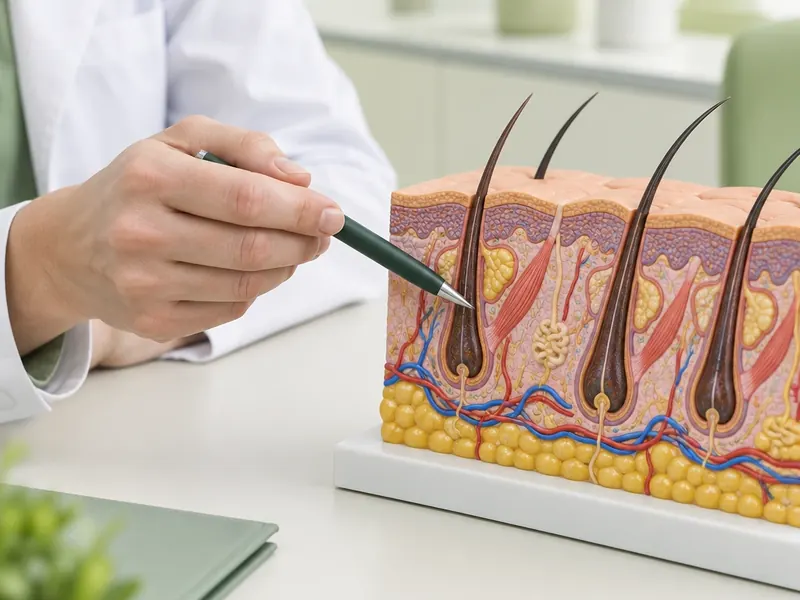
Hair grows in cycles, and losing somewhere between 10 and 100 hairs a day is normal. Hormones, genetics, illness and other factors can disturb this cycle, so hair grows more slowly, falls out faster or stops growing in certain areas. When follicles in an area have stopped working altogether, moving healthy follicles there is often the only way to restore hair.
A hair transplant takes follicles from a donor area and places them where hair has been lost, whether through pattern hair loss or because of scars from burns or injuries. The principle has stayed the same for decades. What has changed is how the grafts are taken and placed, and that has transformed how natural the result looks, how much donor hair is preserved and how quickly patients recover.
Understanding the older techniques helps you see why clinics have moved away from them, and gives you the right questions to ask when comparing offers.
Early methods: punch grafts and minigrafts
Punch grafts, or plugs
The first widely used technique removed large round plugs of skin, each containing many hairs, and moved them to the thinning area. The hair grew, but in visible clumps, which gave the typical doll's-hair look. The donor area was left with noticeable round scars. The method is now considered obsolete.
More on this topic: Hair Transplant, Eyebrow Transplant, Hair Transplant for Women, FUE & DHI Hair Transplant in Singapore, FUE & DHI Hair Transplant in Málaga.
Minigrafts and micrografts
To soften the plug effect, surgeons began cutting smaller grafts with roughly three to eight follicles. The result was less tufted, but still often looked unnatural, and the survival of these grafts was less predictable. Minigrafts were a step forward, yet they did not follow the way hair grows naturally in small groups.

Hair transplant abroad: choose a city and clinic
Prices, the clinic and a free online consultation for each city:
The strip method (FUT)
With the strip method, also called FUT (Follicular Unit Transplantation), the surgeon cuts a horizontal strip of hair-bearing skin from the back of the head with a scalpel. The strip is divided under a microscope into grafts, and the wound is closed with stitches.
Price in your country — message us on WhatsApp
WhatsAppFUT made it possible to transplant natural follicular units for the first time, but it has clear drawbacks:
- a long linear scar across the back of the head, which can show with short haircuts;
- some follicles are inevitably damaged when the strip is cut and divided;
- a longer and more uncomfortable recovery: tightness in the donor area, stitches, and usually two to three weeks before sport and physical work.
Some people who have had FUT later choose scalp micropigmentation to disguise the scar. The method is still offered in places, but most patients today prefer techniques without a linear incision.
Motorised FUE
Follicular Unit Extraction (FUE) moved away from cutting out strips: grafts are taken one by one. In its motorised form, a rotating device works rather like a small drill to release each follicle. It speeds up extraction, but a fast rotating punch can cut or damage follicles if the angle is not perfectly matched to the hair, and in some clinics the channels in the recipient area are still made with a scalpel.
The outcome depends heavily on the surgeon's control over the device. Poorly performed motorised extraction may waste donor hair and leave round scars that are more visible than expected, which is why the technique a clinic uses is always worth asking about.
Manual FUE and DHI
Manual FUE
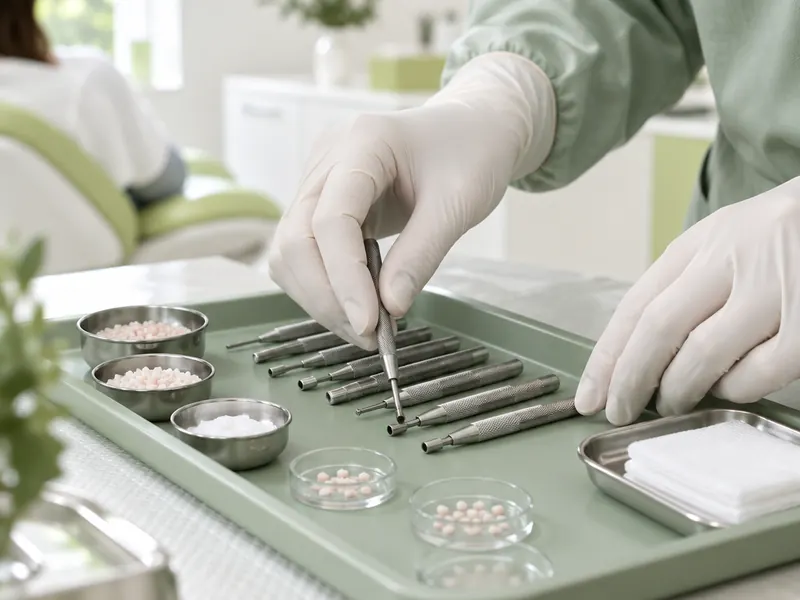
In manual FUE, the surgeon uses ultra-fine hand-held punches and extracts each graft along the natural direction of growth. There are no incisions or stitches, and the small wounds usually heal within about a week, leaving tiny dot-like marks hidden by the surrounding hair. The procedure is performed under local anaesthesia and can take around eight hours. For extensive hair loss, two or three sessions may be needed.
FUE is used for androgenetic alopecia, the most common pattern of hair loss.
DHI and the combined approach
DHI (Direct Hair Implantation) extracts grafts in the same way as FUE, but places them with an implanter pen that creates the opening and inserts the graft in one movement. Many clinics combine the two techniques: FUE for extraction and wider areas, DHI for the hairline and for adding hair between existing strands. The combined FUE and DHI approach is used for androgenetic alopecia and for densification, when thinning hair needs more volume.
Neither method can help when hair has been lost across the whole scalp, including the back and sides, because there is no healthy donor hair to move.
How the right method is chosen for you
At the consultation the doctor determines the type and stage of hair loss, assesses the donor area and estimates how many grafts are needed. Follicles are usually taken from the back and sides of the head, where they tend to grow most reliably after transplantation.
Beard and body hair can occasionally be used, but they generally survive less predictably and are kept for special situations.
New hair typically starts to grow two to three months after the procedure, and the final result is usually visible after about a year. A transplant can be repeated later if the doctor considers it appropriate, but it does not stop the underlying hair loss, so supportive treatment is often discussed as well. The technique itself is chosen by the surgeon after an examination, taking your wishes into account.
How recovery usually goes
- 0-10 daysHealing: the crusts come off, the swelling goes down, the area gradually recovers
- 2-4 weeksShedding of the transplanted hairs: a normal stage, only the hairs fall out, the follicles stay in place
- 3-4 monthsGrowth begins: new hairs gradually appear, the result starts to show
- 6-9 monthsVisible density: the hair becomes thicker, the main volume and contour are visible
- 12-18 monthsFinal result: the final density and a natural hairline take shape
Discussing your options at City Medical Centre
City Medical Centre works with international patients. The first consultation is free and can be held online: send photos of your scalp and your questions on Telegram, and the doctor will explain which method suits your hair loss and donor area. The price is given after this assessment and fixed in the contract, and a personal coordinator supports you from the first message to recovery. More details are on our hair transplant page.
Frequently asked questions
Are punch grafts and minigrafts still used?
Rarely, if at all. These early methods moved hair in large clumps, which often looked unnatural and left visible scars. They have largely been replaced by techniques that transplant natural follicular units of one to four hairs, such as FUE and DHI.
Is the strip method (FUT) worse than FUE?
FUT can yield many grafts in one session, but it leaves a linear scar across the back of the head and usually involves a longer, more uncomfortable recovery. Most patients today prefer FUE, which has no linear incision. The surgeon decides which suits you after an examination.
What is the difference between motorised and manual FUE?
Both remove grafts one by one. Motorised FUE uses a rotating device that speeds up extraction but can damage follicles if not controlled precisely. Manual FUE uses fine hand-held punches and is slower, but lets the surgeon follow the direction of each hair closely.
Which type of hair loss can be treated with FUE and DHI?
FUE is used for androgenetic alopecia, the common pattern of hair loss. The combined FUE and DHI approach is used for androgenetic alopecia and for adding density to thinning hair. When hair is lost across the whole scalp, including the donor area, a transplant is not possible.
Can a hair transplant be repeated?
Yes, a second session is sometimes planned if the area is large or hair loss progresses, provided there is enough donor hair left. The interval and the number of grafts are decided by the doctor after assessing the result of the first procedure.
Have a question about your case? Get a free consultation
Message a coordinator on Telegram: we reply right in the chat, and you can send photos and questions there too.
- The first consultation is free, online consultations are available
- The doctor names the cost after the assessment, and it is fixed in the contract
- A personal coordinator guides you from the first message to recovery
Message our coordinator
We reply right in the chat — you can send photos
Message us on TelegramMessage us on WhatsAppBy messaging us, you agree to our Privacy Policy
In other cities
Read also
 Hair transplant
The history of hair transplantation: from early experiments to modern FUE
How hair transplantation developed: early experiments, Japanese pioneers, Orentreich's donor dominance, follicular units and the arrival of FUE.
 Hair transplant
How to choose a hair transplant clinic and surgeon: what to check before you decide
How to choose a hair transplant clinic and surgeon: qualifications, before-and-after photos, methods, a personal plan, transparent pricing and aftercare.
 Hair transplant
 risks and complications: what is normal and how to lower the risk
What is normal after a hair transplant and what is a complication: swelling, infection, shock loss, poor growth, donor area damage, and how to lower the risk.
Medical disclaimer
This article is for general information only and is not medical advice. It does not replace a consultation with a doctor. Every procedure has contraindications and risks. Read more