


























Hair transplant6 min read
Alopecia explained: from types and causes to diagnosis and treatment options
Alopecia is the medical word for hair loss. It can be temporary or long-lasting, affect a small patch or the whole scalp, and have very different causes. This guide explains the main types of alopecia, the factors behind them, the signs to watch for and how doctors investigate heavy hair loss, so you can talk to a specialist with a clear picture.
By messaging us, you agree to our Privacy Policy
Medically reviewed by Ellina V. Goncharova, dermatovenereologist, trichologist, surgeon. Review date: .
The main points in 30 seconds
- Alopecia is the medical word for hair loss; it can be temporary or permanent, patchy or spread across the whole scalp.
- The most common type is androgenetic alopecia: in men it starts at the temples and crown, in women it thins the top of the head.
- Telogen effluvium after stress, childbirth or illness and traction alopecia from tight hairstyles often reverse once the trigger is gone.
- Start with a dermatologist: diagnosis usually means an examination, blood tests for anaemia, hormones, iron and vitamins, and trichoscopy.
- A transplant suits stable androgenetic alopecia with enough donor hair, not total alopecia or alopecia areata.
Key facts about the procedure
- Stay in clinicSame day
- Final result12–18 months
- AnaesthesiaLocal
- Price
$2,700from $2,200
What alopecia is and its main types
Alopecia means partial or complete loss of hair. It may be temporary or long-term, and it can affect the scalp as well as other areas of the body where hair grows. Not every type behaves the same way, which is why doctors first try to find out which one they are dealing with.
Price in your country — message us on WhatsApp
WhatsAppAndrogenetic alopecia
The most common type, known as male or female pattern hair loss. It is driven mainly by genetic predisposition and the effect of androgen hormones on the hair follicles. In men it usually starts at the temples and the crown; in women it more often shows as gradual thinning across the top of the head.
Alopecia areata
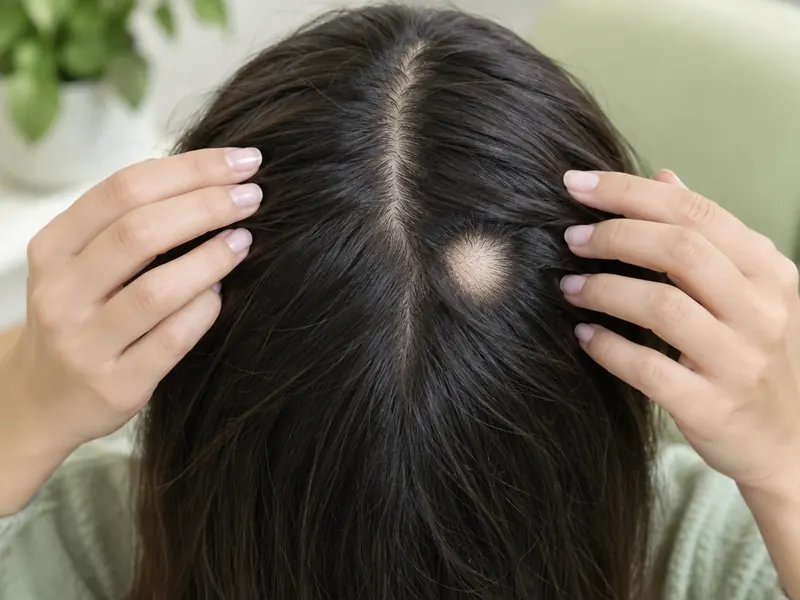
An autoimmune condition in which one or more round, smooth patches without hair appear on the scalp or body. It can start at any age and is sometimes associated with other autoimmune conditions.
Telogen effluvium
A temporary increase in shedding that often follows physical or emotional stress, childbirth, a serious illness or surgery. It is usually reversible: hair tends to recover once the underlying trigger has passed.
Cicatricial (scarring) alopecia
A rare type in which hair follicles are damaged and replaced by scar tissue, so the hair loss in that area is permanent. It can be caused by inflammatory skin conditions, infections or physical injury to the scalp.
Traction alopecia
Hair loss caused by long-term pulling on the follicles, for example from tight ponytails, braids or extensions. It is usually reversible if the hairstyle is changed early enough.
Factors that contribute to hair loss
Hair loss is often the result of several factors acting together. Knowing them helps the doctor choose the right approach.
More on this topic: Hair Transplant, Beard Transplant, Eyebrow Transplant, FUE & DHI Hair Transplant in Málaga, Hair Transplant in Atlanta.
- Genetics. Especially important in androgenetic alopecia: if close relatives lost their hair, the likelihood is higher.
- Hormonal changes. Pregnancy, menopause and thyroid disorders can all affect hair growth, as can changes in androgen levels.
- Medical conditions. Autoimmune disorders such as alopecia areata, iron-deficiency anaemia and some systemic illnesses may lead to shedding.
- Physical and emotional stress. A severe shock, an injury or major surgery can trigger temporary shedding a few months later.
- Medication and treatment. Some medicines, for example certain drugs used for cancer, arthritis or depression, and radiotherapy to the head can affect hair growth.
- Damage to the hair and scalp. Harsh chemical treatments, frequent use of hot styling tools and tight hairstyles weaken the hair.
- Diet. A lack of iron, zinc or B vitamins may contribute to thinning.

Hair transplant abroad: choose a city and clinic
Prices, the clinic and a free online consultation for each city:
How alopecia shows itself
Diffuse thinning
One of the most common signs: the hair becomes thinner across the whole head, often most visibly at the crown or along the parting. Because it develops slowly, many people only notice it once the loss is already significant.
Localised patches
Hair falls out in defined areas and leaves bald spots, often round or oval. This is typical of alopecia areata, where patches can appear suddenly and are sometimes accompanied by mild itching or tingling.
Typical patterns
- Men: the hairline recedes at the temples and the crown thins, gradually spreading to other areas.
- Women: even thinning over the top of the head, while the front hairline is usually preserved.
- Scarring alopecia: hair loss may come with redness, itching or tenderness of the scalp.
Hair texture can change too: strands may become finer and weaker. And hair loss often has an emotional side, affecting confidence and wellbeing, which is a valid reason to seek help.
Which specialists can help
When shedding becomes noticeable, it is worth seeing a doctor rather than trying random products. Depending on the case, several specialists may be involved:
- Dermatologist. The main specialist for the skin, hair and scalp. They assess the scalp and look for conditions such as seborrhoeic dermatitis or psoriasis that can contribute to hair loss.
- Endocrinologist. Checks for hormonal imbalance, including thyroid problems and hormonal changes in women.
- General practitioner. Carries out a general examination, looks for causes such as iron or vitamin deficiency and refers you to other specialists when needed.
Treatment of hair loss itself should be prescribed by a doctor after an examination. Avoid starting medication on your own: the right choice depends on the type of alopecia and your general health.
Get in touch using whichever way suits you
We will answer your questions and find a convenient time for a consultation
By messaging us, you agree to our Privacy Policy
How heavy hair loss is diagnosed
A precise diagnosis is the basis of any sensible plan, including the question of whether a hair transplant makes sense at all.
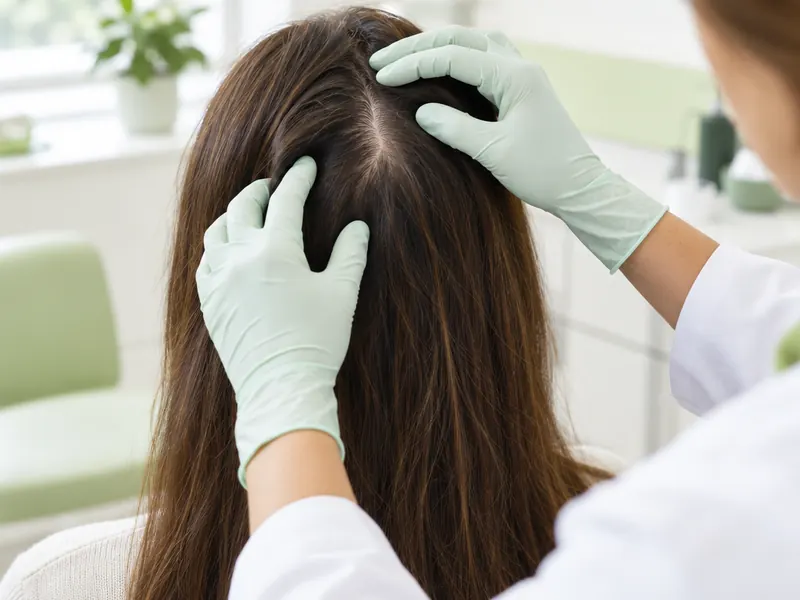
- Examination and history. The doctor looks at the extent and pattern of hair loss and asks about family history, illnesses, stress, diet and lifestyle.
- Blood tests. A full blood count can reveal anaemia; hormone tests and levels of iron, vitamins and minerals help find other causes.
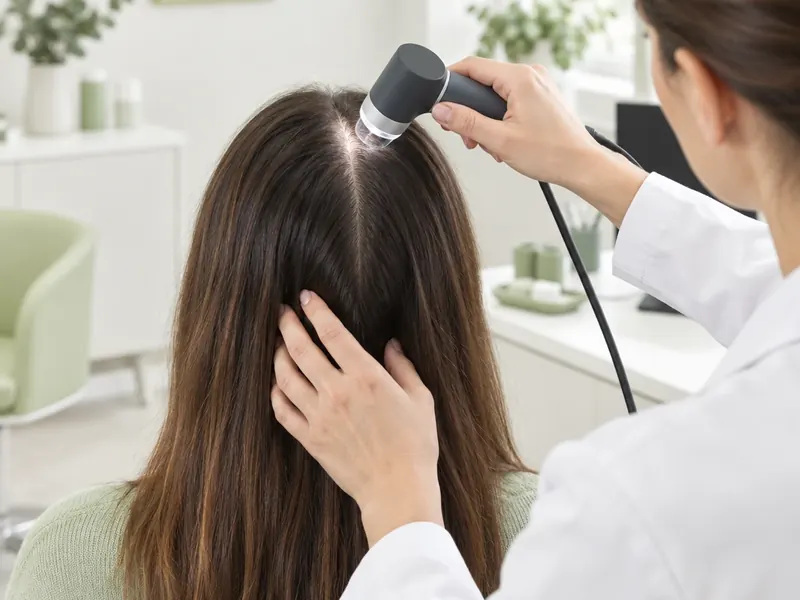
- Trichoscopy. A magnified examination of the scalp and follicles with a special camera.
- Scalp biopsy. Used only in some cases, when the diagnosis is unclear.
- Referral. If needed, you may be sent to an endocrinologist or other specialists.
Where a hair transplant fits in
Based on the diagnosis, the dermatologist draws up a treatment plan, which may include medication, changes in diet and lifestyle, and scalp care. Many types of hair loss, such as telogen effluvium or traction alopecia, can improve once the cause is addressed.
A hair transplant is considered mainly for androgenetic alopecia that has become stable, when there is enough healthy hair in the donor area at the back and sides of the head. FUE is used for androgenetic alopecia, and a combined FUE and DHI approach is used for androgenetic alopecia and to add density to thinning areas. A transplant is not suitable for total alopecia, where there is no donor hair, and alopecia areata is a contraindication. It also does not treat the cause of hair loss, so ongoing care from a doctor remains important. You can read more on the hair transplant page.
How recovery usually goes
- 0-10 daysHealing: the crusts come off, the swelling goes down, the area gradually recovers
- 2-4 weeksShedding of the transplanted hairs: a normal stage, only the hairs fall out, the follicles stay in place
- 3-4 monthsGrowth begins: new hairs gradually appear, the result starts to show
- 6-9 monthsVisible density: the hair becomes thicker, the main volume and contour are visible
- 12-18 monthsFinal result: the final density and a natural hairline take shape
Consultation at City Medical Centre
City Medical Centre works with international patients. The first consultation is free and can be held online: send photos of your hair and donor area, describe how your hair loss developed and share any test results you have. The doctor assesses whether a transplant is appropriate and names the cost, which is then fixed in the contract.
A personal coordinator stays with you from your first message to the end of recovery, and photos and questions can be sent by Telegram. Learn more on the hair transplant page.
Frequently asked questions
What is the most common type of alopecia?
Androgenetic alopecia, also called male or female pattern hair loss. It is linked to genetics and the effect of androgen hormones on the follicles. In men it usually affects the temples and crown, while in women it tends to cause diffuse thinning on top of the head.
Is alopecia always permanent?
No. Telogen effluvium and traction alopecia are often reversible once the trigger is removed, and alopecia areata can come and go. Scarring alopecia, by contrast, destroys the follicles in the affected area. A doctor can tell which type you have after an examination.
Which doctor should I see about hair loss?
Start with a dermatologist, who specialises in the skin, hair and scalp. Depending on the findings, you may also be referred to an endocrinologist or your general practitioner for blood tests and a check of hormones, iron and vitamins.
Can a hair transplant help with alopecia?
It can help with stable androgenetic alopecia when there is enough donor hair. It is not suitable for total alopecia, where there is no donor hair, and alopecia areata is a contraindication. The doctor decides after assessing your scalp.
What tests are done for heavy hair loss?
Usually an examination of the scalp, a medical history, blood tests for anaemia, hormones, iron and vitamins, and trichoscopy, a magnified view of the follicles. A scalp biopsy is done only in some cases when the diagnosis remains unclear.
Have a question about your case? Get a free consultation
Message a coordinator on Telegram: we reply right in the chat, and you can send photos and questions there too.
- The first consultation is free, online consultations are available
- The doctor names the cost after the assessment, and it is fixed in the contract
- A personal coordinator guides you from the first message to recovery
Message our coordinator
We reply right in the chat — you can send photos
Message us on TelegramMessage us on WhatsAppBy messaging us, you agree to our Privacy Policy
Read also
 Hair transplant
Male pattern baldness: treatment options and when to consider a transplant
What causes male pattern baldness, how Norwood stages work, which treatments slow it down, when a hair transplant makes sense and how to care for the result.
 Hair transplant
Aftercare for a beard transplant: what to do from the first day to the final result
How to care for a transplanted beard: the first 48 hours, washing in week one, weeks two to four, shedding at one to three months and long-term care.
 Breast augmentation
Anchor (inverted-T) breast lift: when this technique is the right choice
Anchor breast lift explained: who needs the inverted-T technique, how it compares with other lifts, pros and cons, contraindications, scars and recovery.
Medical disclaimer
This article is for general information only and is not medical advice. It does not replace a consultation with a doctor. Every procedure has contraindications and risks. Read more