
























Tummy tuck6 min read
Liposuction or tummy tuck: how to choose the right operation for your abdomen
Liposuction and a tummy tuck are often mentioned together, but they are not interchangeable. One removes fat, the other removes excess skin and tightens the abdominal wall. This article explains what each operation does, who it suits, what changes after pregnancy or weight loss, whether they can be combined, and what recovery and scars to expect.
By messaging us, you agree to our Privacy Policy
The main points in 30 seconds
- Liposuction removes fat only; a tummy tuck removes excess skin and fat and usually repairs separated abdominal muscles.
- Liposuction suits stubborn fat under firm skin, while loose skin after pregnancy or weight loss usually needs a tummy tuck.
- Neither operation is a way to lose weight: both work best when your weight has been stable.
- After liposuction many people return to desk work in one to two weeks; after a tummy tuck it is usually two to four weeks.
- The two are often combined, and the surgeon decides after checking your skin, fat and muscles.
Key facts about the procedure
- Operation time2–4 hours
- Back to work2–3 weeks
- Stay in clinic1–3 days
- PriceAt consultation
Liposuction or tummy tuck: the short answer
Both operations change the shape of the abdomen, but they solve different problems. Liposuction removes fat. A tummy tuck (abdominoplasty) removes excess skin and fat and, in most cases, repairs the abdominal muscles.
Price in your country — message us on WhatsApp
WhatsAppSo the real question is not which operation is better, but what is causing the shape you want to change. If it is a layer of stubborn fat under firm skin, liposuction is often enough. If it is loose, overhanging skin or a stomach that bulges because the muscles have separated, fat removal alone will not fix it.
What each operation actually removes
Liposuction: fat only
More on this topic: Tummy tuck (abdominoplasty), Lipoabdominoplasty, Full Tummy Tuck.
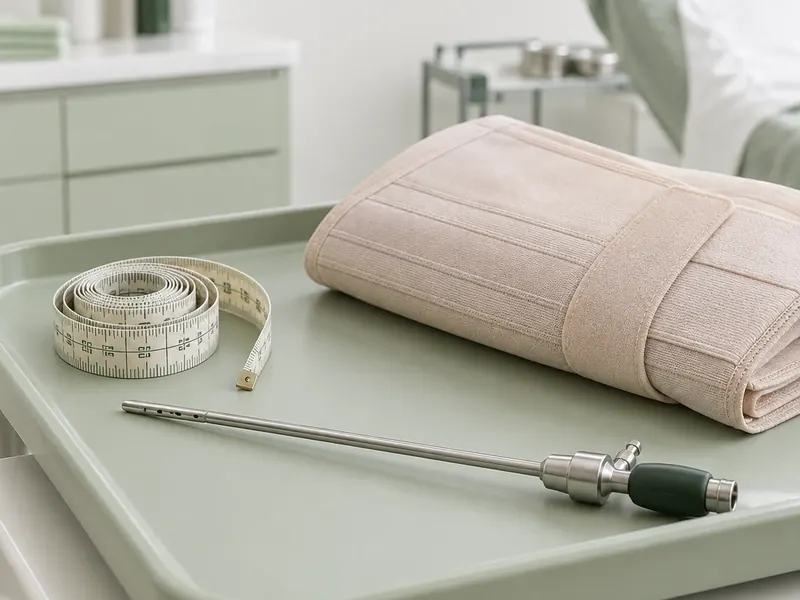
The surgeon injects a special fluid into the area, then removes fat through a thin tube (cannula) inserted via small incisions. Fat cells taken out do not grow back, so the new contour usually lasts as long as your weight stays stable. Liposuction does not remove skin, does not tighten muscles and does not erase stretch marks.
Tummy tuck: skin, fat and muscle repair
Through an incision low on the abdomen, the surgeon removes the stretched skin and the fat beneath it, stitches separated muscles back together and, in a full tummy tuck, repositions the belly button. Stretch marks on the removed skin below the navel go with it. A mini tummy tuck treats only the lower abdomen through a shorter incision, without moving the navel.
Side by side: key differences
Removes
- Liposuction
- Local fat deposits
- Tummy tuck
- Excess skin and fat
Muscle separation (diastasis)
- Liposuction
- Not treated
- Tummy tuck
- Usually repaired
Best skin condition
- Liposuction
- Firm and elastic
- Tummy tuck
- Loose or overhanging
Scars
- Liposuction
- A few small incisions
- Tummy tuck
- A long low scar, plus one around the navel in a full tummy tuck
Anaesthesia
- Liposuction
- Local or general, depending on the scope
- Tummy tuck
- General
Typical return to desk work
- Liposuction
- Often within one to two weeks
- Tummy tuck
- Usually after two to four weeks or more
Compression garment
- Liposuction
- Several weeks
- Tummy tuck
- About six to eight weeks
These are typical figures. Your surgeon will give you a plan based on your own examination.

Tummy tuck abroad: choose a city and clinic
Prices, the clinic and a free online consultation for each city:
Who each operation suits
Liposuction usually suits people who are close to a healthy weight, have good skin tone and are bothered by specific areas of fat that do not respond to diet and exercise. Typical examples are the lower belly, the flanks and the waist.
A tummy tuck is usually considered when:
- the skin hangs over or folds after pregnancy or major weight loss;
- the stomach bulges even when you are slim, which often points to separated muscles;
- there is loose skin around a C-section scar;
- stretch marks are concentrated on the lower abdomen.
Neither operation is a way to lose weight. Both work best when your weight has been stable for some time and your BMI is within a healthy range.
After pregnancy and after major weight loss
Pregnancy stretches the abdominal wall from the inside. Many women find that after childbirth the skin stays loose and the rectus muscles remain apart, a condition called diastasis. Exercise can strengthen the muscles, but it cannot bring widely separated muscles back together or shrink stretched skin. In that situation liposuction alone may even make loose skin look worse, because it removes volume without tightening.
After significant weight loss, including after bariatric surgery, the main problem is usually excess skin rather than fat. Surgeons generally advise waiting until your weight has been stable for several months. If you are planning another pregnancy, it is usually better to wait: surgery is not done during pregnancy or breastfeeding, and a future pregnancy can stretch the repaired abdomen again. More details are on our tummy tuck page.
Can the two be combined?
Yes, and they often are. During a tummy tuck the surgeon may also use liposuction on the flanks, the waist or the upper abdomen to refine the contour and make the transition between areas smoother. Whether this is safe and useful in your case depends on your health, the amount of tissue and the blood supply to the skin, so the decision is always made by the surgeon after an examination.
Recovery and scars
After liposuction
Swelling and bruising are common in the first weeks, and a compression garment is worn for about a month to six weeks. Many people return to desk work within a week or two. The incisions are small and usually fade well. The final contour is usually judged after about three months, sometimes later, once swelling has settled.
After a tummy tuck
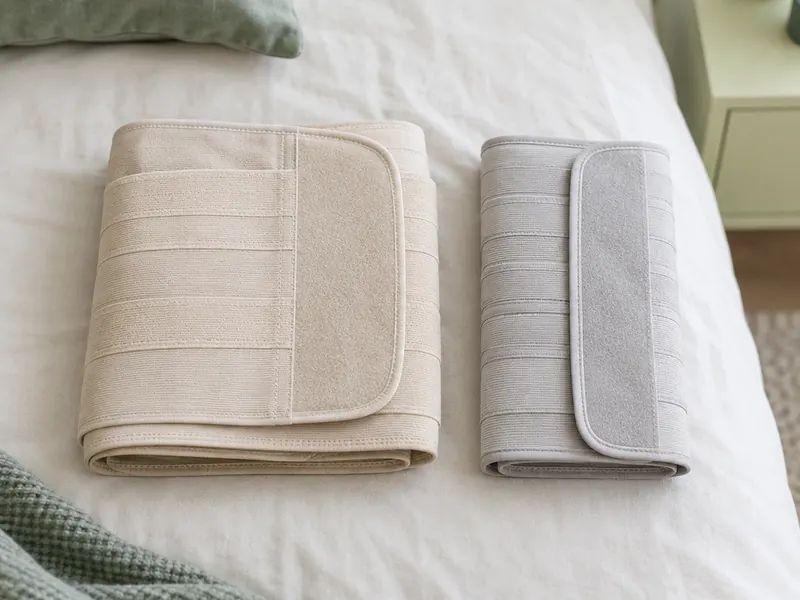
This is a bigger operation. It is done under general anaesthesia, often takes two to four hours, and most patients stay in hospital for one to three days. You wear an abdominal binder for about six to eight weeks, avoid heavy lifting and strenuous exercise, and usually return to office work after two to four weeks, longer for physical jobs. The scar runs low across the abdomen and is planned so that underwear or swimwear can cover it. It is red at first and usually becomes paler and flatter over many months.
Both operations carry the risks of any surgery, such as bleeding, infection, fluid collection (seroma), blood clots, numbness and uneven contours. Smoking raises the risk of wound problems, so surgeons usually ask you to stop well before the operation.

How the surgeon decides
At the consultation the surgeon looks at three layers: the skin, the fat and the muscles. They check how much the skin stretches and recovers, pinch the fat to judge its thickness, and ask you to tense your abdomen to feel for a gap between the muscles. They also ask about pregnancies, weight history, health conditions and your plans for the future.
The choice then follows from what is found: fat with good skin points to liposuction, loose skin or diastasis points to a tummy tuck, and a mix of both often leads to a combined plan. Your goals and how much recovery time you can take also matter.
Consultation at City Medical Centre
City Medical Centre works with international patients. The first consultation is free and can be held online: send photos of your abdomen from the front and side, tell us about pregnancies and weight changes, and ask whether liposuction, a tummy tuck or a combination suits you. The doctor assesses your case and names the cost, which is then fixed in the contract.
A personal coordinator stays with you from your first message to the end of recovery, and photos and questions can be sent by Telegram. Find out more on the tummy tuck page.
How recovery usually goes
- 1–3 daysHospital stay under medical supervision; drains are usually removed after two days
- 7 daysStitches removed
- 2–3 weeksOffice work resumes
- 30 daysMost swelling goes
- 1.5–2 monthsCompression binder period; swelling and tightness pass; interim result
- 6–12 monthsThe final contours and scar
Sources
- NHS — Tummy tuck (abdominoplasty)
- NHS — Liposuction
- MedlinePlus — Abdominal wall surgery
- PubMed / NCBI — Safety of tumescent and laser-assisted liposuction: review of the literature (2011)
- PubMed / NCBI — A Systematic Review of Efficacy and Complications of High-Definition Liposuction (Plast Reconstr Surg, 2023)
Medical disclaimer. This article is for general information only and is not medical advice. It does not replace a consultation with a doctor. Every procedure has contraindications and risks. Read more · How we prepare and review medical content
Frequently asked questions
Is liposuction or a tummy tuck better for a flat stomach?
It depends on the cause. If your skin is firm and the problem is a layer of fat, liposuction is often enough. If the skin is loose or the stomach bulges because the muscles have separated, a tummy tuck is usually needed. Many patients benefit from a combination, which the surgeon decides on after an examination.
Can liposuction fix loose skin or diastasis?
No. Liposuction removes fat but does not remove skin or bring separated muscles back together. In people with poor skin tone it can make looseness more visible. Excess skin and diastasis are treated with a tummy tuck, in which the surgeon removes skin and stitches the muscles together.
Which operation leaves bigger scars?
A tummy tuck. It leaves a long scar low on the abdomen and, in a full tummy tuck, a scar around the belly button. The scar is planned to sit under underwear and usually fades over many months. Liposuction leaves only a few small incision marks.
Should I wait until I have finished having children?
Usually yes. A new pregnancy can stretch the skin again and separate the repaired muscles. Surgery is not done during pregnancy or breastfeeding, and many surgeons advise planning a tummy tuck once you have no plans for more children, or waiting at least a year after surgery before a pregnancy.
Can I have liposuction and a tummy tuck at the same time?
Often yes. Liposuction of the flanks, waist or upper abdomen is commonly added to a tummy tuck to refine the contour. Whether it is safe in your case depends on your health and the amount of tissue, and the surgeon decides this at the consultation.
Have a question about your case? Get a free consultation
Message a coordinator on Telegram: we reply right in the chat, and you can send photos and questions there too.
- The first consultation is free, online consultations are available
- The doctor names the cost after the assessment, and it is fixed in the contract
- A personal coordinator guides you from the first message to recovery
Message our coordinator
We reply right in the chat — you can send photos
Message us on TelegramMessage us on WhatsAppBy messaging us, you agree to our Privacy Policy
Read also
 Tummy tuck
Loose skin after weight loss: what tightens it and when surgery is needed
Why skin sags after major weight loss, what diet, exercise and devices can and cannot do, when surgery is needed and how a tummy tuck removes the abdominal apron.
 Tummy tuck
Mini or full tummy tuck: what each one corrects and how to tell which you need
A mini tummy tuck treats the lower abdomen through a shorter incision; a full one tightens the whole abdomen. Compare scars, navel, diastasis and recovery.
 Osteoarthritis treatment
Living with knee or hip osteoarthritis: exercise, weight and daily habits
How to live well with knee or hip osteoarthritis: safe exercise, weight, footwear and insoles, daily adjustments, and how habits support PRP or SVF treatment.