
























Hair transplant6 min read
Hair loss after childbirth: why it happens, how long it lasts and what helps
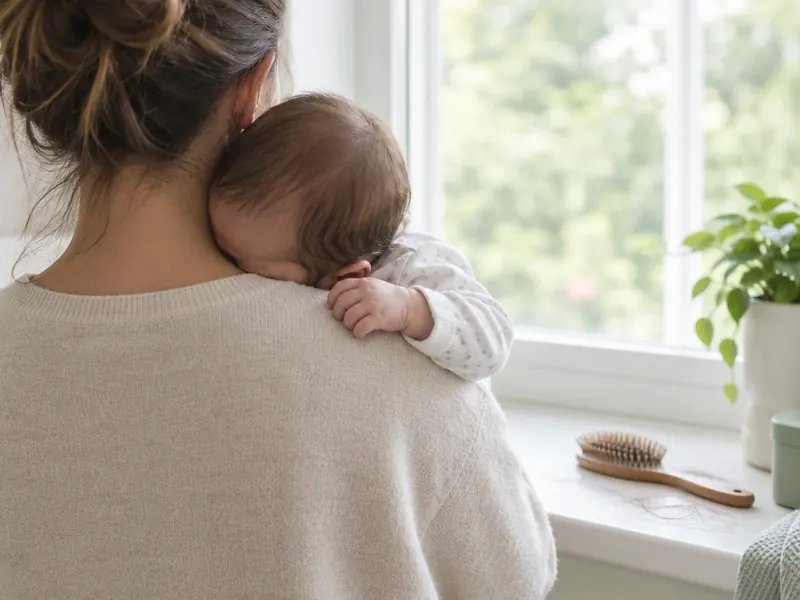
Many new mothers notice handfuls of hair in the brush a few months after giving birth. It can be alarming, but postpartum shedding is usually temporary and is a normal response to hormonal changes. This article explains why it happens, how long it tends to last, what supports recovery and when it makes sense to see a doctor.
By messaging us, you agree to our Privacy Policy
Medically reviewed by Ellina V. Goncharova, dermatovenereologist, trichologist, surgeon. Review date: .
The main points in 30 seconds
- Shedding after childbirth is usually temporary: oestrogen falls and many hairs enter the resting phase at once.
- It typically starts two to three months after birth and can last up to about six months.
- Hair density returns gradually, and it can take up to a year to look as it did before pregnancy.
- See a doctor if shedding is very heavy, lasts beyond the first year, leaves bald patches or comes with marked tiredness.
- A transplant is almost never needed for postpartum shedding; take supplements only after talking to a doctor, especially while breastfeeding.
Key facts about the procedure
- Stay in clinicSame day
- Final result12–18 months
- AnaesthesiaLocal
- Price
$2,700from $2,200
Why hair falls out after childbirth
During pregnancy the body goes through many changes, including a marked rise in oestrogen. This hormone keeps more hairs in the growth phase and delays their natural shedding, which is why many women find their hair looks thicker and fuller while they are pregnant.
Price in your country — message us on WhatsApp
WhatsAppAfter the birth, oestrogen levels fall quickly. The hairs that were held in the growth phase then move into the resting phase together and, a few weeks later, fall out at around the same time. Doctors call this telogen effluvium. It is not a disease: it is the body returning to its usual hair cycle.
Other factors can make shedding more noticeable:
- Stress. Giving birth and caring for a newborn are demanding, and stress can affect the hair cycle.
- Low levels of vitamins and minerals. Iron, zinc and B vitamins are sometimes depleted after pregnancy and birth, and deficiencies can weaken hair.
- Changes in sleep and eating. Broken nights and irregular meals are common in the first months and do not help hair recovery.
- Genetic tendency. In some women shedding after childbirth is more pronounced because of inherited factors.
- Physical tiredness. Constant fatigue can disturb normal hair growth.
When it starts and how long it lasts
Postpartum shedding usually begins around two to three months after the birth and can continue for up to about six months. Hair loss rarely looks even: it is often most visible at the hairline, the temples and the top of the head, which is why it can seem worse than it is.
More on this topic: Hair Transplant, Hair Transplant for Women, FUE Hair Transplant, Hair Transplant in Atlanta.
For most women the hair cycle settles on its own, and hair density gradually returns over the following months. Short new hairs along the hairline are a common sign that regrowth has started. Recovery is gradual, so it can take up to a year before the hair looks as it did before pregnancy.
It is worth seeing a doctor if shedding is very heavy, continues well beyond the first year, leaves distinct bald patches, or comes with other symptoms such as extreme tiredness, feeling cold, weight changes or heavy periods. These can point to a thyroid problem, anaemia or another condition that needs treatment.
Hair transplant abroad: choose a city and clinic
Prices, the clinic and a free online consultation for each city:
How to cope with hair loss after childbirth
Balanced nutrition
Hair follicles need protein, B vitamins, zinc and iron to work normally. Foods rich in omega-3 fatty acids, such as oily fish, nuts and flaxseed, are part of a balanced diet that supports hair. If you are breastfeeding, your nutritional needs are higher, so regular meals matter even more.
Gentle hair care
- Choose mild shampoos and conditioners without harsh ingredients to avoid extra damage.
- Limit hair dryers, straighteners and other hot styling tools.
- Avoid tight ponytails, buns and braids, which pull on the roots and can add to hair loss.
Scalp massage
A light scalp massage with the fingertips or a soft massager can feel relaxing and may support blood flow to the scalp. It will not stop postpartum shedding, but it is a pleasant and safe habit.
Vitamins and supplements
Vitamin and mineral supplements can help when there is a proven deficiency. B vitamins, iron and biotin are often discussed, but it is best to take supplements only after talking to a doctor, especially while breastfeeding, and ideally after blood tests.
Emotional support
Changes in appearance after childbirth can affect confidence. Talking about it with your partner, friends or a professional can help, and knowing that the shedding is usually temporary often eases the worry.
Medical treatments for persistent hair loss
If hair loss does not settle after several months, a doctor may look for other causes and suggest treatment. Options depend on the diagnosis and may include correcting iron or vitamin deficiencies, treating thyroid problems, topical medicines and scalp procedures such as PRP (platelet-rich plasma) injections or mesotherapy.
Some treatments are not suitable during breastfeeding, so always tell the doctor if you are nursing.
Which specialists can help
Because hair loss after childbirth can have several causes, more than one specialist may be involved:
- Dermatologist or hair specialist. Examines the scalp and hair, identifies the type of hair loss and recommends treatment.
- Endocrinologist. Checks for hormonal problems, particularly thyroid disorders, which are not unusual after pregnancy.
- GP. Carries out a general check-up, orders blood tests and refers you to other specialists if needed.
- Gynaecologist. Helps assess hormonal changes related to pregnancy, the menstrual cycle or contraception.
What a diagnosis may include
- An examination of the hair and scalp and questions about family history, health, diet and stress.
- Blood tests, including a full blood count, iron stores, thyroid hormones and, where relevant, other hormones and vitamins.
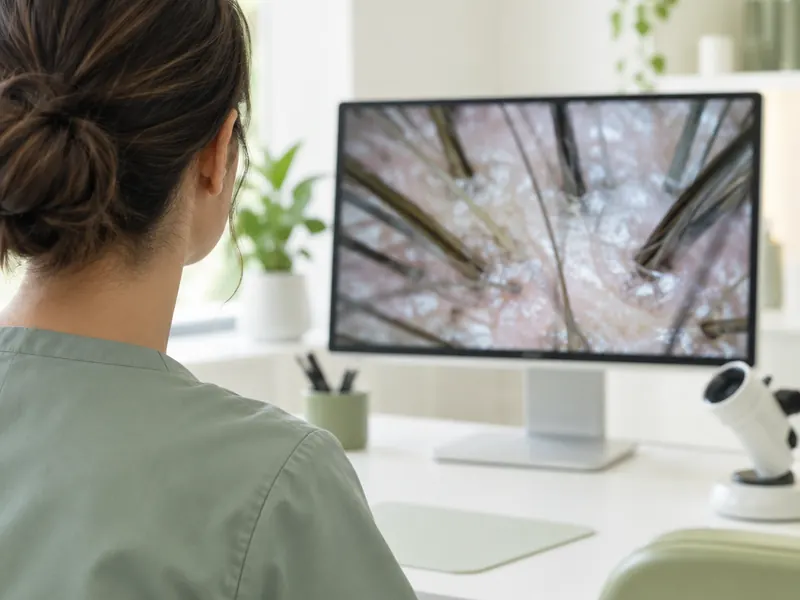
- Trichoscopy, a magnified examination of the hair and follicles.
- Occasionally a scalp biopsy, if the picture is unclear.
Is a hair transplant needed after childbirth?
In the vast majority of cases, no. Postpartum shedding is usually temporary, the follicles remain alive and hair grows back on its own, so a hair transplant is not needed for it. Surgery would not make sense while the hair cycle is still recovering.
A transplant may only be discussed in a different situation: when, long after the birth, a doctor finds a stable pattern of hair loss that has not recovered, for example female pattern (androgenetic) hair loss that pregnancy has made more visible, and the donor area at the back of the head is dense enough. In such cases FUE, or a combined FUE and DHI approach for adding density, may be considered. A transplant does not treat the cause of hair loss, so the decision is made only after a full assessment. You can read more about hair transplant options if this applies to you.

How recovery usually goes
- 0-10 daysHealing: the crusts come off, the swelling goes down, the area gradually recovers
- 2-4 weeksShedding of the transplanted hairs: a normal stage, only the hairs fall out, the follicles stay in place
- 3-4 monthsGrowth begins: new hairs gradually appear, the result starts to show
- 6-9 monthsVisible density: the hair becomes thicker, the main volume and contour are visible
- 12-18 monthsFinal result: the final density and a natural hairline take shape
Consultation at City Medical Centre
If some time has passed since the birth and your hair has not recovered, you can get an expert opinion at City Medical Centre, a clinic for international patients. The first consultation is free and can be held online: send photos and questions via Telegram, and the doctor will assess whether this is still temporary shedding or a form of hair loss where a hair transplant may help.
If a procedure is appropriate, the doctor gives the price after the assessment and it is fixed in the contract, and a personal coordinator supports you from the first message to recovery.
Frequently asked questions
Is hair loss after childbirth normal?
Yes. It is very common and is caused by the fall in oestrogen after the birth. Hairs that were kept in the growth phase during pregnancy shed together a few months later. It is usually temporary and the hair grows back.
When does postpartum hair loss stop?
Shedding usually starts two to three months after the birth and can last up to about six months. Density then returns gradually, and it may take up to a year for the hair to look as it did before. If it lasts longer, see a doctor.
Do I need a hair transplant after postpartum hair loss?
Usually not. Postpartum shedding is temporary and the follicles stay alive, so hair grows back without surgery. A transplant is only considered if a doctor later finds a stable type of hair loss, such as female pattern hair loss, and a sufficient donor area.
Can I take vitamins for hair while breastfeeding?
Some supplements are suitable while breastfeeding, but it is best to check with a doctor first and, ideally, have blood tests. Iron or vitamin supplements help most when there is a proven deficiency.
When should I see a doctor about hair loss after birth?
See a doctor if shedding is very heavy, continues beyond the first year, leaves bald patches or comes with symptoms such as severe fatigue, weight changes or feeling cold. These can point to thyroid problems or anaemia.
Have a question about your case? Get a free consultation
Message a coordinator on Telegram: we reply right in the chat, and you can send photos and questions there too.
- The first consultation is free, online consultations are available
- The doctor names the cost after the assessment, and it is fixed in the contract
- A personal coordinator guides you from the first message to recovery
Message our coordinator
We reply right in the chat — you can send photos
Message us on TelegramMessage us on WhatsAppBy messaging us, you agree to our Privacy Policy
In other cities
Read also
 Hair transplant
Hair loss treatments vs hair transplant: what works and when
Treatment or transplant? How medication, supplements and PRP work, what they cannot do, when a transplant becomes the logical step and why the two are often combined.
 Hair transplant
Hair after chemotherapy: why it falls out, how it grows back and how to cope
Why chemotherapy causes hair loss, what may reduce it, how hair usually grows back after treatment and how to care for your scalp and wellbeing meanwhile.
 Hair transplant
Hair loss after illness or stress: why a transplant is not the first step
Heavy shedding after illness, surgery or stress is usually temporary. Why a transplant is not the first step, how long it lasts and when to consider a transplant.
Medical disclaimer
This article is for general information only and is not medical advice. It does not replace a consultation with a doctor. Every procedure has contraindications and risks. Read more