
















Breast augmentation7 min read
Breast augmentation recovery week by week: what to expect
Knowing what to expect after breast augmentation makes recovery calmer and safer. Healing follows a fairly predictable sequence, from the first day in hospital to the moment the implants settle into their natural position. This guide explains each stage, when you can sleep, work, exercise and fly again, and which symptoms need a doctor.
By messaging us, you agree to our Privacy Policy
The main points in 30 seconds
- Swelling and discomfort peak in the first week; sleep on your back, keep arms below shoulder level and do not drive.
- Many people return to desk work after one to two weeks, and the compression garment is usually worn for four to six weeks.
- Light cardio may be possible after about a month, but gym, running and chest exercises usually wait at least six weeks.
- Implants sit high at first and settle over months; many surgeons assess the result at three and six months.
- See your surgeon if one breast suddenly swells or hurts more, or if you have fever or wound discharge; calf pain or breathlessness is urgent.
Key facts about the procedure
- Operation time1.5–3 hours
- Back to work7–14 days
- Stay in clinic1 day
- Fixed price$4,700
Breast augmentation recovery at a glance
Recovery after breast augmentation follows a fairly predictable path. The first days are about rest and pain control, the first two weeks about wound healing, and the following weeks about slowly returning to normal activity while the implants settle.
Price in your country — message us on WhatsApp
WhatsAppEvery body heals at its own pace, and the plan depends on the implant size, its position (above or below the muscle) and the incision. The timeline below is a general guide: your own surgeon's instructions always come first.
First 24 hours
- What usually happens
- Tightness, soreness, tiredness after anaesthesia
- What you can usually do
- Rest, short walks, compression garment on
Week 1
- What usually happens
- Swelling and discomfort peak, then begin to ease
- What you can usually do
- Light everyday tasks, first check-up with the surgeon
Week 2
- What usually happens
- Wounds close, stitches removed if not dissolvable
- What you can usually do
- Many people return to desk work
Weeks 3–6
- What usually happens
- Most swelling goes down, arm movement becomes easier
- What you can usually do
- Arms above shoulder level, then light cardio as allowed
Months 3–6
- What usually happens
- Implants drop and soften, scars start to fade
- What you can usually do
- Most normal activities, full workouts with approval
The first day and week 1
The first 24 hours
After the operation you wake up in a recovery area under close observation. The chest usually feels tight and heavy, and moving the arms is uncomfortable. This is expected, especially when the implants are placed under the muscle.
More on this topic: Breast augmentation and mammoplasty with a natural result, Breast Augmentation with Implants, Breast Lift (Mastopexy), Breast Implants in Calgary.
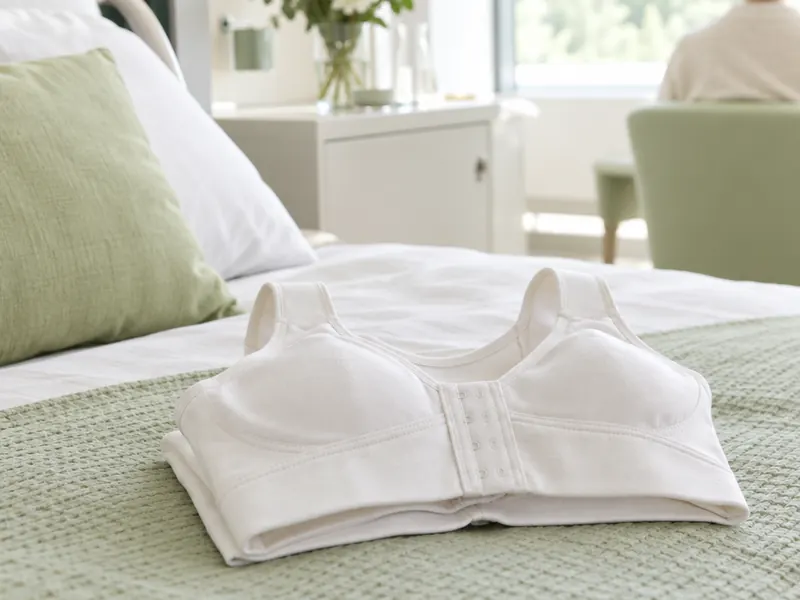
- You are given pain relief and a compression bra or garment is put on straight after surgery.
- If drains were placed, they collect excess fluid and are usually removed within the first days.
- Getting up and taking short walks early helps circulation and lowers the risk of blood clots.
- Many patients stay in hospital overnight; at City Medical Centre the inpatient stay after surgery is one day.
Days 2 to 7: rest, swelling and the first check-up
The first week is the most demanding. Swelling, bruising and a feeling of pressure are normal, and the breasts often sit high and look too firm. This is not the final shape.
- Sleep on your back with your upper body slightly raised, using pillows.
- Keep your arms close to your body: do not lift them above shoulder level or carry anything heavy.
- Wear the compression garment day and night, taking it off only as your surgeon allows.
- Do not drive for at least a week: pain and restricted arm movement slow your reactions.
- Keep the dressings dry and follow the wound care instructions exactly.
Around day seven the surgeon checks the wounds, the position of the implants and the level of swelling. This visit is also when you get the go-ahead for the next stage.
Breast augmentation abroad: choose a city and clinic
Prices, the clinic and a free online consultation for each city:
Week 2: stitches, showers and going back to work
By the second week most people feel noticeably better. Pain is usually manageable, and many patients return to desk work after one to two weeks. Jobs that involve lifting or physical effort need longer.
Stitches are removed at this stage unless dissolvable stitches were used. The surgeon tells you when you can shower normally and how to care for the incisions. Baths, pools, saunas and steam rooms stay off limits: heat and soaking can increase swelling and the risk of infection. Continue to sleep on your back and keep wearing the compression garment.
Weeks 3–6: compression, sleep and exercise
In this period most visible swelling goes down, and arm movements become easier. After about three weeks, many surgeons allow you to raise your arms above your shoulders again.
- Compression garment: usually worn for about four to six weeks, sometimes longer, depending on your surgeon's protocol.
- Sleep: side sleeping is often allowed after several weeks; sleeping on your front usually comes last, after your surgeon agrees.
- Exercise: walking is encouraged from the start; light cardio may be possible after about a month, while gym workouts, running and chest exercises usually wait at least six weeks.
- Lifting: avoid lifting anything heavier than a few kilograms; your surgeon may keep this limit for up to three months.
Around six weeks most people return to the majority of their normal activities. You can read more about the operation itself on our breast augmentation page.
Flying home after surgery abroad
If you travel for surgery, plan your trip around recovery rather than around the operation date. Many surgeons prefer patients to stay nearby until the first check-up, which often takes place about a week after the operation.
- Agree on the return date with your surgeon before booking flights.
- During the flight, walk in the aisle when you can, drink water and avoid alcohol to lower the risk of blood clots; wear compression stockings if advised.
- Wear your compression garment and loose clothing that opens at the front.
- Ask someone else to lift your luggage into the overhead locker.
Having implants does not in itself prevent flying. Keep your surgical documents and the implant details with you in case you need medical help at home.
When do breast implants drop and look natural?
Right after surgery the implants often sit high, and the upper part of the breast looks full and firm. Over the following weeks the tissues and muscle relax, the implants gradually settle lower, and the lower part of the breast fills out. This process is often called "drop and fluff".
After about a month the breasts usually look softer and more natural. Settling continues for several months: many surgeons assess the result at three and six months, and scars keep fading for a year or longer. One breast may settle faster than the other, which is common in the early weeks.
Warning signs: when to contact your surgeon
Some discomfort, swelling and changes in nipple sensation are a normal part of healing. Contact your surgeon promptly if you notice:
- one breast that suddenly becomes much larger, tense or more painful than the other;
- fever, spreading redness, warmth or discharge from a wound;
- a wound that opens or bleeds;
- pain that keeps getting worse instead of easing.
Pain or swelling in one calf, shortness of breath or chest pain may indicate a blood clot and need urgent medical help. Later on, a breast that becomes hard, changes shape or feels painful should also be checked, as it may be a sign of capsular contracture.
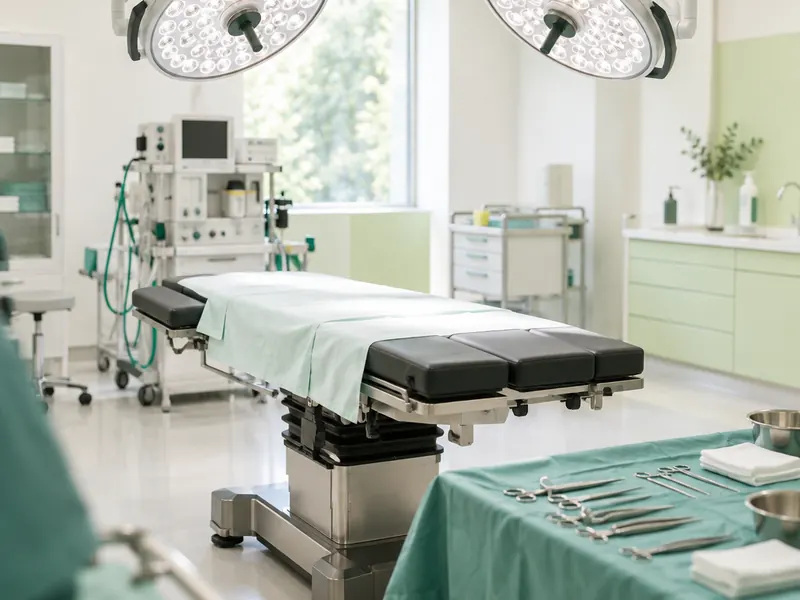
Consultation at City Medical Centre
City Medical Centre works with international patients. The first consultation is free and can be held online: you can send photos and ask any question about the operation, travel dates and recovery. The doctor assesses your case and names the cost, which is then fixed in the contract.
A personal coordinator stays with you from your first message to the end of recovery, and photos and questions can be sent by Telegram. Find out more on the breast augmentation page.
How recovery usually goes
- 7–14 daysReturn to work without physical exertion
- 3 weeksPost-op swelling disappears; scars form; no lifting over 3 kg, no raising arms above shoulder level
- 1 monthThe swelling subsides and the breasts take on a natural shape and softness
- 4–6 weeksFitness, swimming, pool and sea; compression garments worn for 4–6 weeks
- 3 monthsDiscomfort disappears; inflammatory changes resolve and a pocket forms around the implant; strength training
Sources
- NHS — Breast enlargement (augmentation)
- American Society of Plastic Surgeons — Breast augmentation recovery
- BAAPS — Breast augmentation
- PubMed / NCBI — Recognizing and Managing Breast Implant Complications: A Review (Int J Womens Health, 2025)
- PubMed / NCBI — Outcomes in primary breast augmentation: 1539 consecutive cases (Plast Reconstr Surg, 2015)
Medical disclaimer. This article is for general information only and is not medical advice. It does not replace a consultation with a doctor. Every procedure has contraindications and risks. Read more · How we prepare and review medical content
Frequently asked questions
How long does it take to recover from breast augmentation?
Most people feel much better after one to two weeks and return to most normal activities around six weeks. Swelling and firmness continue to settle for several months, and the final result is usually assessed at about three to six months.
How long do I need to wear a compression bra?
A compression bra or garment is put on straight after surgery and is usually worn day and night for about four to six weeks. Some surgeons recommend a supportive sports bra for longer. Follow the schedule your own surgeon gives you.
When can I sleep on my side after breast augmentation?
In the first weeks you sleep on your back with your upper body slightly raised. Side sleeping is often allowed after several weeks, and sleeping on your front usually comes last. Your surgeon decides at the check-ups, based on how the implants are settling.
When can I go back to work and the gym?
Many patients return to desk work after one to two weeks. Light cardio may be allowed after about a month, while gym training, running and chest exercises usually wait at least six weeks. Heavy lifting may be limited for up to three months.
When can I fly home after breast augmentation abroad?
Many surgeons prefer you to stay nearby until the first check-up, often about a week after surgery. Agree on the date with your surgeon before booking. During the flight, move around, drink water and wear your compression garment.
Have a question about your case? Get a free consultation
Message a coordinator on Telegram: we reply right in the chat, and you can send photos and questions there too.
- The first consultation is free, online consultations are available
- The doctor names the cost after the assessment, and it is fixed in the contract
- A personal coordinator guides you from the first message to recovery
Message our coordinator
We reply right in the chat — you can send photos
Message us on TelegramMessage us on WhatsAppBy messaging us, you agree to our Privacy Policy
Read also
 Breast augmentation
Breast fillers vs implants: why surgeons advise caution
Breast fillers vs implants: how filler enlargement is done, its possible complications, why many surgeons and regulators advise against it and what implants offer.
 Breast augmentation
Breast implant rupture: signs, diagnosis and what to do
How to tell if a breast implant has ruptured, why it happens, how silent rupture is found with ultrasound or MRI, and what removal or replacement involves.
 Breast augmentation
 scars: incision options and how scars fade
Where breast augmentation scars are placed, how each incision compares, what affects scar quality, how scars mature over a year and how to care for them.