























Hair transplant6 min read
FUE beard transplant: how the method works and what to know before you choose it
A beard transplant helps men who want a fuller, more even beard, and FUE is one of the techniques most often used for it. This article explains why FUE suits facial hair, who may be a candidate, how the procedure runs step by step, what its strengths and limitations are, which risks to keep in mind and how to choose a surgeon.
By messaging us, you agree to our Privacy Policy
Medically reviewed by Ellina V. Goncharova, dermatovenereologist, trichologist, surgeon. Review date: .
The main points in 30 seconds
- FUE takes follicles one by one, usually from the back of the head, and implants them into patchy or sparse areas of the beard.
- It leaves no linear scar, only tiny round marks that usually heal within days; many people are back to daily life in a few days.
- A beard session can last several hours, and the price depends on the number of grafts needed.
- Transplanted hairs often shed after a few weeks; new growth starts after a few months and the result is judged at around a year.
- If hair fell out suddenly in round patches or the skin is inflamed, a doctor should find the cause before any transplant.
Key facts about the procedure
- Stay in clinicSame day
- Final result12–18 months
- AnaesthesiaLocal
- Price
$2,700from $2,200
When a beard transplant is considered
A beard transplant is a cosmetic procedure, and the decision to have one is always personal. Men usually start looking into it for one of the following reasons:
- Patchy growth. The beard grows in patches, leaving visible gaps on the cheeks, chin or jawline.
- Sparse beard. Facial hair grows everywhere, but it is too thin to look full.
- Scars. Injuries, burns or earlier surgery have left areas where hair no longer grows.
Price in your country — message us on WhatsApp
WhatsApp- Genetics. Some men simply have weak facial hair growth by nature, even when hormones and health are normal.
- Shape and style. The wish to change the outline of the beard, moustache or sideburns, or to make the cheek line sharper.
Not every gap in a beard calls for surgery. If the hair has fallen out suddenly in round patches, or the skin is inflamed, a doctor should first look for the cause. A transplant moves hair from one place to another; it does not treat the condition behind hair loss, so the surgeon decides whether it is appropriate only after an examination.
What the FUE method is
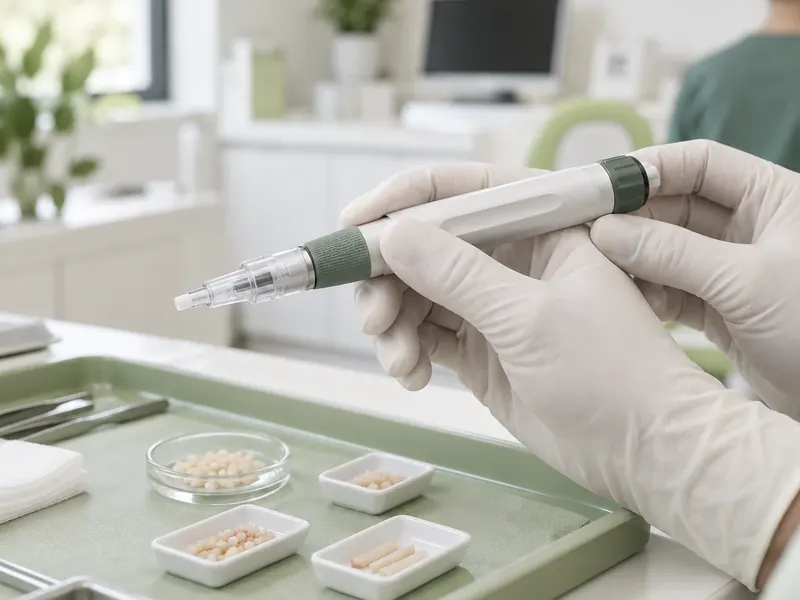
FUE (Follicular Unit Extraction) is a transplant technique in which follicular units are taken out one by one from the donor area with micro-instruments. For a beard, the donor area is usually the back of the head, where hair tends to be the most stable and is often close in texture to facial hair. The extracted grafts are then implanted into the beard area.
More on this topic: Hair Transplant, FUE Hair Transplant, Beard Transplant, FUE & DHI Hair Transplant in Singapore, FUE & DHI Hair Transplant in Málaga.
Because FUE works graft by graft, it leaves no long incision in the donor area. Instead there are many tiny round marks that usually heal within days and are hard to see once the hair grows back.
Hair transplant abroad: choose a city and clinic
Prices, the clinic and a free online consultation for each city:
Advantages and limitations of FUE
Why FUE is often chosen for beards
- Little trauma to the skin. There are no large incisions, only tiny punctures.
- No linear scar. Unlike FUT, where a strip of skin is removed, FUE does not leave a line across the back of the head.
- Relatively quick recovery. Many patients return to everyday life within a few days, following the doctor's instructions.
- Natural-looking result. Transplanted hair usually grows like the rest of the beard once the grafts have taken, provided the angle and direction of growth were respected during implantation.
What to bear in mind
- Duration. Extracting grafts one at a time takes longer, and a beard session can last several hours.
- Cost. FUE is often more expensive than some other methods, and the price depends on the number of grafts needed.
- Limited donor supply. The donor area is not unlimited, which matters if you may also want a scalp transplant later.
The procedure step by step
1. Consultation and planning
The doctor assesses the skin, the existing facial hair and the donor area, and discusses the shape and density you would like. Hair and scalp are often examined with a dermatoscope or trichoscopy to evaluate density and the condition of the follicles. Together you agree on a realistic design for the beard line.
2. Preparation
You are usually advised to avoid alcohol and smoking for several days beforehand and to discuss any medication you take, as some drugs affect bleeding. On the day of the procedure the beard and donor areas are cleaned and numbed with a local anaesthetic.
3. Extraction of follicles
The surgeon removes follicular units from the donor area with micro-instruments. Depending on the clinic, this is done by hand or with the help of a motorised or robot-assisted device.
4. Preparing the grafts
The extracted follicles are sorted into grafts, the units used for implantation. Single-hair grafts are generally preferred for the face, as they look more natural there.
5. Implantation
The surgeon makes tiny openings in the beard area and places the grafts one by one, following the natural angle and direction of beard hair. This step largely determines how natural the finished beard looks.
6. Finishing
The treated areas are cleaned, and you receive detailed aftercare instructions for the following days and weeks.
Possible risks and complications
A beard transplant with FUE is generally considered a safe procedure when performed by a qualified team, but like any intervention it carries risks. The most common ones include:
- infection, usually linked to not following aftercare instructions;
- temporary numbness of the skin in the donor or beard area;
- redness, swelling and small crusts in the first days;
- uneven growth or lower density than expected, which is uncommon and is sometimes corrected with a second session.
It is also normal for many transplanted hairs to shed a few weeks after the procedure. New growth usually starts after a few months, and the final result is typically judged at around a year. If redness or pain increases instead of easing, contact your doctor.
How to choose a clinic and surgeon
- Experience. Check that the surgeon regularly performs beard transplants with FUE, not only scalp procedures.
- Before-and-after photos. Look at examples of beard work and read what patients say about their experience.
- Equipment. The clinic should use modern instruments for extraction and implantation.
- Licences. Make sure the clinic and the doctor hold the necessary licences and certificates.
- Honest planning. A good surgeon explains limitations as clearly as benefits and does not promise a specific number of hairs or a guaranteed outcome.
An FUE beard transplant can be an effective way to achieve a denser, more even beard, but it needs careful planning and a qualified specialist. You can read more about the procedure on our hair transplant page.
How recovery usually goes
- 0-10 daysHealing: the crusts come off, the swelling goes down, the area gradually recovers
- 2-4 weeksShedding of the transplanted hairs: a normal stage, only the hairs fall out, the follicles stay in place
- 3-4 monthsGrowth begins: new hairs gradually appear, the result starts to show
- 6-9 monthsVisible density: the hair becomes thicker, the main volume and contour are visible
- 12-18 monthsFinal result: the final density and a natural hairline take shape
Consultation at City Medical Centre
City Medical Centre works with international patients. The first consultation is free and can be held online: send photos of your beard and the back of your head, and ask any question about the FUE method and recovery. The doctor assesses your case and names the cost, which is then fixed in the contract. A personal coordinator stays with you from your first message to the end of recovery, and photos and questions can be sent by Telegram. Find out more on the hair transplant page.
Frequently asked questions
Where do the hairs for a beard transplant come from?
Usually from the back of the head, where hair tends to be stable and often similar in texture to facial hair. The surgeon assesses the donor area at the consultation and decides how many grafts can be taken safely.
Does an FUE beard transplant leave scars?
FUE does not leave a linear scar. It leaves many tiny round marks in the donor area, which usually heal within days and become hard to notice once the surrounding hair grows back. Healing varies from person to person.
How long does the procedure take?
A beard session usually takes several hours, because each graft is extracted and implanted individually. The exact time depends on the number of grafts and the areas being treated, and the surgeon gives an estimate after planning.
When will I see the result?
Transplanted hairs often shed within the first weeks, which is normal. New growth usually appears after a few months, and the final density and shape are typically judged at around twelve months after the procedure.
Can a transplant fix any gap in a beard?
Not always. Patchy growth caused by genetics or scars often responds well, but sudden round patches or inflamed skin need a medical diagnosis first. The surgeon decides whether a transplant is suitable after an examination.
Have a question about your case? Get a free consultation
Message a coordinator on Telegram: we reply right in the chat, and you can send photos and questions there too.
- The first consultation is free, online consultations are available
- The doctor names the cost after the assessment, and it is fixed in the contract
- A personal coordinator guides you from the first message to recovery
Message our coordinator
We reply right in the chat — you can send photos
Message us on TelegramMessage us on WhatsAppBy messaging us, you agree to our Privacy Policy
Read also
 Hair transplant
What are the benefits of a hair transplant, and what are its limits?
The real benefits of a hair transplant: a natural hairline, long-lasting growth and more confidence, plus the limits and risks to know before you decide.
 Hair transplant
Crown hair transplant: how thinning at the top of the head is treated
Can a transplant fix a thinning crown? Causes of crown baldness, when surgery makes sense, FUE or DHI, graft planning, recovery and when results show.
 Liposuction
Stubborn belly fat: exercise, non-surgical treatments or liposuction?
How to get rid of stubborn belly fat: what diet and exercise can do, the limits of non-surgical treatments, when liposuction or a tummy tuck makes sense.
Medical disclaimer
This article is for general information only and is not medical advice. It does not replace a consultation with a doctor. Every procedure has contraindications and risks. Read more